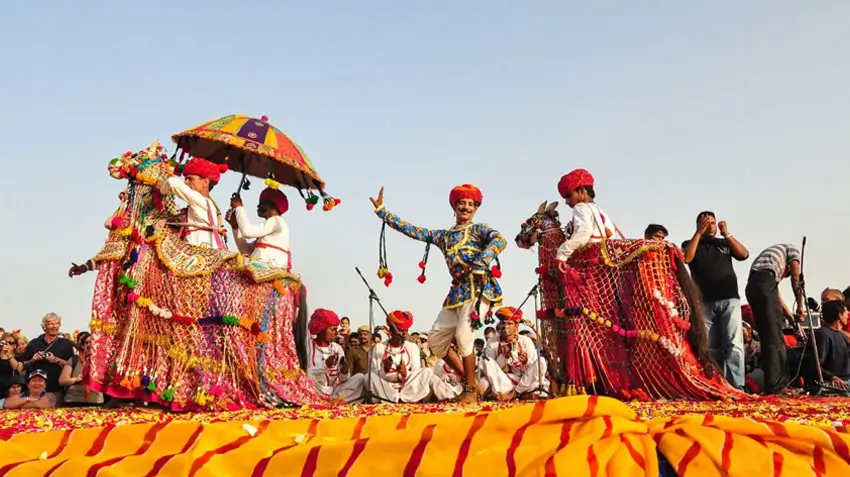
Rajasthan is not defined solely by its forts, palaces, or desert landscapes. Its true cultural identity unfolds through gatherings. Fairs and festivals are not occasional celebrations here; they are living expressions of history, belief, and social rhythm. To understand Rajasthan deeply, one must observe how its people come together in shared spaces, marking time through ritual, music, trade, and collective memory.
The fairs and festivals of Rajasthan are not performances staged for visitors. They are community-driven events rooted in agrarian cycles, religious devotion, royal patronage, and regional pride. Travelers who encounter Rajasthan during these periods witness traditions in motion rather than static heritage.
A culturally immersive journey through Rajasthan becomes richer when aligned with its festival calendar.
Rajasthan’s climate, geography, and social structure have shaped its festival culture over centuries. Harsh desert conditions encouraged communal gatherings as moments of relief, celebration, and exchange. Royal courts historically supported festivals as expressions of power, generosity, and cultural continuity.
Unlike urban festivals elsewhere, many Rajasthani fairs combine commerce, devotion, and entertainment into a single event. Livestock trading happens alongside music performances. Pilgrimage rituals coexist with folk dances. This fusion reflects a society where life, faith, and survival were never separated.
For travelers, attending a Rajasthan cultural festival offers insight into how tradition adapts without losing authenticity.
Step into the grandeur of Rajasthan’s iconic festivals with bespoke travel planning, private vehicles, and authentic cultural experiences.
Chat On WhatsApp Contact UsThe Pushkar Camel Fair stands as one of the most internationally recognized fairs of Rajasthan, yet its core purpose remains deeply local. Originally a livestock trading event tied to agricultural cycles, the fair evolved into a cultural gathering without losing its economic relevance.
Held near the sacred lake of Pushkar, the fair brings together camel traders, rural communities, pilgrims, and artisans. Camels adorned with colorful bridles, bells, and textiles become moving symbols of desert life.
Beyond the spectacle, the fair reveals Rajasthan’s rural economy, social hierarchies, and relationship with the desert environment. Early mornings and late evenings offer the most authentic encounters, when trading, rituals, and quiet observation replace crowds.
Jaipur’s cultural calendar reflects its role as a historical capital and modern intellectual center. Literary and cultural festivals here emphasize dialogue, storytelling, and artistic exchange rather than ritual alone.
In Jaipur, these gatherings attract writers, thinkers, artists, and audiences from diverse backgrounds. While contemporary in form, they echo older traditions of courtly debate and patronage.
For travelers interested in ideas, language, and cultural exchange, Jaipur’s festivals provide a quieter but intellectually rich counterpoint to more visually dramatic fairs.
In the heart of the Thar Desert, the Desert Festival celebrates resilience, artistry, and adaptation. Hosted near the golden sandstone city of Jaisalmer, the festival showcases folk music, dance, and traditional competitions tied to desert life.
Events often highlight skills developed through necessity, from camel handling to music that carries across open landscapes. Costumes, instruments, and rhythms reflect centuries of adaptation to environment and isolation.
Attending this festival allows travelers to experience desert culture beyond imagery, engaging with the human stories that sustain it.
Teej marks seasonal change and feminine devotion, particularly associated with marital harmony and monsoon renewal. Celebrated widely across Rajasthan, Teej reflects emotional, spiritual, and agricultural themes.
In cities like Jaipur, Teej processions feature decorated idols, music, and community participation. Women dress in traditional attire, sing folk songs, and engage in rituals passed down through generations.
For cultural travelers, Teej offers a window into domestic traditions and gendered expressions of faith that often remain unseen outside festival contexts.
Gangaur stands among Rajasthan’s most visually striking festivals, especially in cities with strong royal heritage. The festival honors marital devotion and feminine strength through ritual, procession, and collective participation.
In Jaipur and Udaipur, Gangaur celebrations involve ornate idols, palace courtyards, and lakeside ceremonies. Royal associations elevate the festival’s scale, blending devotion with pageantry.
For travelers, Gangaur illustrates how faith and royal identity intertwined, creating festivals that are both sacred and ceremonial.
The Mewar Festival reflects regional identity rooted in historical independence and cultural continuity. Celebrated in Udaipur, it marks the arrival of spring and honors local traditions through music, dance, and ritual.
Unlike broader state-wide festivals, the Mewar Festival emphasizes local pride. Performances and ceremonies reflect Mewar’s distinct history and artistic expression.
This festival appeals to travelers seeking regional nuance rather than generalized cultural exposure.
Marwar’s cultural narrative centers on valor, loyalty, and music shaped by desert landscapes. The Marwar Festival in Jodhpur celebrates this identity through folk performances, ballads, and ceremonial events.
Music dominates the festival, carrying stories of battles, alliances, and devotion. Performers often belong to hereditary musician communities, preserving oral history through song.
Attending the Marwar Festival allows travelers to engage with Rajasthan’s martial past through artistic expression rather than monuments alone.
The Kite Festival marks seasonal transition and communal joy. Celebrated across Rajasthan, especially in Jaipur, it transforms rooftops into vibrant social spaces.
Kite flying becomes a collective activity, breaking social barriers as families and neighbors gather. The sky fills with color, sound, and friendly competition.
For travelers, this festival offers spontaneous interaction and insight into everyday celebration rather than formal ritual.
Beyond major festivals, Rajasthan hosts countless local fairs tied to temples, harvest cycles, and regional legends. These gatherings often remain absent from travel brochures yet reveal the most authentic expressions of community life.
Village fairs combine worship, trade, entertainment, and social exchange. They are intimate, informal, and deeply rooted in local history.
Travelers willing to step off conventional routes often find these events the most memorable.
Festivals serve as platforms for Rajasthan’s performing arts. Folk music, dance, and storytelling come alive during celebrations, sustaining traditions that rely on audience participation.
Instruments, rhythms, and costumes vary by region, reflecting environmental and historical influences. Performances are not rehearsed spectacles but living practices embedded in social life.
For cultural travelers, festivals offer the most organic context to experience these art forms.
Festival food reflects both celebration and practicality. Dishes prepared during fairs often rely on preserved ingredients, clarified butter, and slow cooking techniques suited to climate and storage limitations.
Shared meals during festivals reinforce community bonds. Travelers invited to observe or participate gain insight into hospitality customs and culinary heritage.
Food during festivals is not just nourishment; it is cultural memory.
Aligning travel with festivals requires thoughtful planning. Accommodation availability, crowd dynamics, and pacing should be considered carefully.
Early planning ensures access to meaningful experiences without discomfort. Travelers benefit most when festivals complement rather than dominate the itinerary.
A balanced approach allows cultural immersion without sensory overload.
From vibrant fairs to grand cultural festivals, experience Rajasthan in its most authentic and luxurious form. Travel in comfort with private vehicles, expert local planning, and personalized itineraries designed around your interests.
Chat On WhatsApp Contact UsFestivals reveal Rajasthan as a living culture rather than a preserved exhibit. They show how history continues to shape identity, how belief adapts to modernity, and how community remains central despite change.
Witnessing these gatherings transforms understanding. Rajasthan becomes not just a destination, but a shared human experience.
They reflect community life, seasonal cycles, and historical traditions that define regional identity.
Yes, many festivals are welcoming and offer meaningful cultural insight when approached respectfully.
Some large festivals attract crowds, but timing and location influence experience quality.
Photography is generally accepted, but sensitivity and permission are important.
Participation is often informal and welcomed, especially in community-oriented events.
Many festivals combine religious devotion with cultural celebration.
Core rituals remain consistent, though scale and format may evolve.
High-demand festivals require advance planning for comfortable stays.
With guidance, village fairs can be accessed respectfully and safely.
Cultural sensitivity, pacing, and genuine observation enhance the experience.