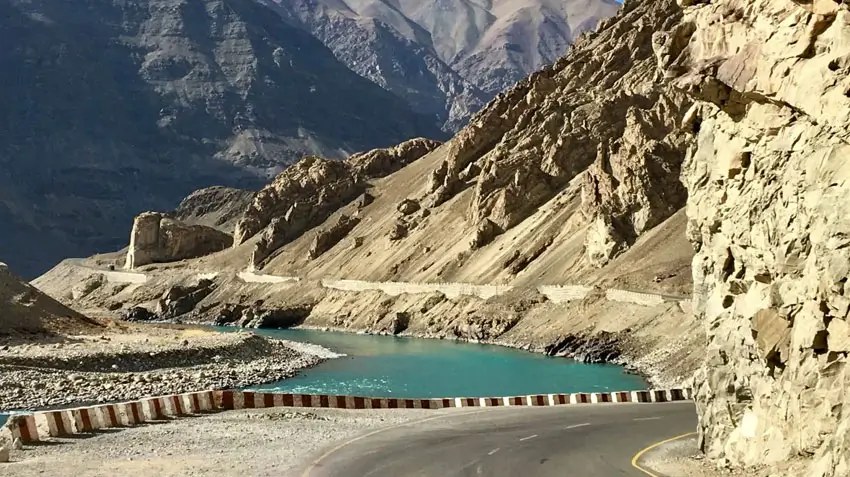
The Srinagar–Leh highway is more than a road. It is a gradual ascent from lush Kashmiri valleys to the stark, high-altitude deserts of Ladakh. Few journeys in the world compress such dramatic geographical change into a single overland experience. Travelers begin among poplar-lined lakes and end amid moonscape mountains and monasteries perched above windswept plains.
In recent years, infrastructure improvements and tunnel development have reshaped how travelers approach Ladakh. Roads that once demanded resilience are becoming more accessible. While improved connectivity offers comfort, it also changes the character of the journey. The overland progression — once defined by remoteness and patience — is evolving.
September, positioned at the edge of the travel season, offers what many seasoned explorers call the golden window. Crowds thin after peak summer, skies remain clear, and mountain passes remain open before winter closures begin. For travelers seeking both comfort and raw Himalayan drama, this period balances accessibility and authenticity.
The highway today stands at a transitional moment — still wild enough to feel epic, yet increasingly supported by luxury camps, curated transfers, and private expedition planning.
The journey begins in Srinagar, where Dal Lake reflects houseboats and Mughal gardens descend toward quiet waters. The first stretch of the Srinagar to Leh road trip moves gently through valleys, orchards, and small towns. This gradual introduction allows travelers to ease into altitude rather than confront it abruptly.
As the road advances toward Sonamarg, the landscape tightens into alpine meadows framed by snow-capped peaks. Rivers rush alongside the highway, carving valleys that gradually narrow into dramatic mountain corridors.
Crossing Zoji La Pass marks a psychological shift. The lush green softness of Kashmir gives way to Ladakh’s rugged, mineral-toned expanses. The road becomes narrower, cliffs steeper, and air thinner. This transformation is not sudden but progressive, allowing travelers to witness the Himalayas in stages.
Unlike flying directly into Leh, which exposes visitors to immediate high altitude, the overland route provides gradual acclimatization. The body adjusts as scenery intensifies. This layered progression is what makes the highway journey deeply immersive rather than merely scenic.
Experience one of India’s most breathtaking road trips along the Srinagar-Leh Highway. From stunning landscapes and high-altitude passes to comfortable accommodations and expert travel guidance, we make your adventure safe, seamless, and unforgettable.
Chat On WhatsApp Contact UsHigh-altitude travel demands respect. Leh sits at over 3,500 meters above sea level, and sudden ascent can cause discomfort. The Srinagar–Leh highway journey naturally incorporates acclimatization through overnight halts.
Stopping in Kargil or nearby villages allows the body to adjust before reaching higher elevations. Travelers experience altitude not as shock, but as transition.
Luxury planning enhances this process. Comfortable stays with proper heating, hydration support, and oxygen availability reduce strain. Professional guides monitor traveler wellness, ensuring pacing remains appropriate.
This method contrasts sharply with direct flights into Leh, where travelers often spend the first day resting due to altitude effects. Overland arrival replaces recovery time with exploration time.
Acclimatization transforms what could be a physically taxing journey into a balanced, thoughtful expedition.
Kargil is often remembered through the lens of historical conflict. Yet for travelers, it offers much more than memory of military significance. The town rests within a broad valley framed by rugged mountains and intersecting rivers.
An overnight stay in Kargil breaks the journey strategically. Evenings here feel quieter than in Leh, offering travelers an early glimpse of Ladakh’s pace.
Local markets, modest cafés, and distant mountain silhouettes create atmosphere without overwhelming tourism infrastructure. Staying in Kargil also reduces driving fatigue, allowing the next day’s route to
feel measured rather than rushed.
Luxury overland itineraries now incorporate curated stops in and around Kargil, including monastery visits and riverfront walks. Rather than a transit halt, it becomes a meaningful chapter in the journey.
Beyond Kargil, the road curves toward Lamayuru, often described as “Moonland” due to its surreal geological formations. The terrain appears almost extraterrestrial, with layered rock faces carved by centuries of erosion.
Lamayuru Monastery stands dramatically above the valley, its white walls contrasting against ochre hills. Visiting this monastery provides cultural immersion as well as visual drama.
Travelers often pause here for photography, meditation, or simply to absorb silence. The landscape carries a spiritual undertone, amplified by fluttering prayer flags and distant chants.
September light enhances these formations, casting long shadows that deepen texture. For photographers and contemplative travelers, Lamayuru is one of the most visually striking segments of the highway.
Arriving in Leh after days on the road feels ceremonial. The town appears as a cluster of whitewashed buildings against barren slopes. The Leh Palace rises above the settlement, echoing architectural styles of Tibetan lineage.
Unlike the isolation felt on the highway, Leh introduces organized infrastructure. Boutique hotels, heritage stays, and luxury camps now operate within or around the town.
Leh also serves as a base for exploring:
The overland arrival enhances appreciation. Travelers who have seen valleys shift into deserts perceive Ladakh not as abrupt terrain, but as culmination.
September holds a unique balance. Peak summer crowds begin to thin, yet mountain passes remain open. Skies are often clearer after monsoon moisture dissipates, creating crisp visibility across valleys.
Temperatures cool, making midday exploration more comfortable. Nights grow colder, enhancing the appeal of heated luxury tents and fireside dinners.
Wildlife activity in certain regions increases subtly during this period, adding to ecological interest.
For travelers seeking both accessibility and solitude, September captures Ladakh before winter closures alter mobility.
Ongoing tunnel projects aim to reduce travel time and make Ladakh accessible year-round. While this development enhances safety and convenience, it will inevitably alter the psychological character of the journey.
Tunnels compress distance. They bypass dramatic passes and reduce exposure to altitude changes. For many, this convenience will be welcome.
Yet the overland ritual — climbing, descending, witnessing terrain evolve — may diminish in intensity once segments are bypassed.
Travelers who experience the highway before full tunnel integration encounter Ladakh in its transitional state — modernizing yet still wild.
Luxury overland journeys now include premium SUVs, curated picnic stops, and high-end camps positioned along remote valleys.
Travelers no longer need to sacrifice comfort for immersion. Heated bedding, curated meals, and experienced drivers allow exploration without fatigue.
Boutique lodges in Leh and Nubra blend traditional architecture with contemporary design, creating harmony between heritage and comfort.
This fusion enables travelers to embrace Himalayan drama without compromising well-being.
Embark on an unforgettable journey through India’s most scenic landscapes. From high-altitude mountain passes to breathtaking views, enjoy a safe and comfortable adventure with expert guidance and hassle-free travel arrangements. Let us plan your perfect road trip!
Chat On WhatsApp Contact UsThe highway journey is not only geological. It is cultural. Buddhist monasteries, prayer flags, roadside shrines, and small settlements reveal Ladakh’s spiritual heritage.
Conversations with monks, local artisans, and shepherd communities enrich the route beyond scenery.
Travelers encounter lifestyles shaped by altitude and isolation. Agriculture, architecture, and ritual all adapt to harsh climatic realities.
Such immersion adds intellectual and emotional depth to the journey.
Flying into Leh delivers destination. Driving delivers transformation.
The Srinagar to Leh highway journey allows travelers to witness gradual change in vegetation, color, architecture, and air density.
The body adjusts. The mind recalibrates. The journey becomes process rather than event.
For many, that gradual transformation remains the most memorable aspect of Ladakh travel.
Yes, with appropriate pacing and medical awareness.
Typically two days with overnight halt for acclimatization.
Yes, it offers clear skies and manageable crowds.
Gradual ascent reduces risk significantly.
Road conditions have improved, but professional drivers are recommended.
Yes, curated lodges and camps operate along the highway.
It will reduce travel time and change route dynamics.
Yes, except in restricted military zones.
Premium SUVs provide comfort and safety.
Yes, when properly acclimatized and paced.