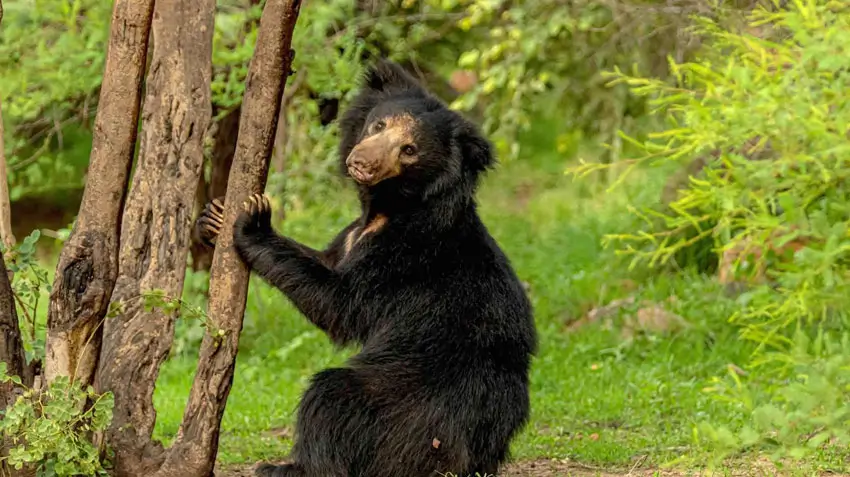
For decades, Indian wildlife tourism has been dominated by one name — the tiger. Safari brochures, conservation campaigns, and international travel magazines have long presented the Bengal tiger as the singular icon of Indian wilderness. Yet seasoned wildlife travelers are now seeking something different, something rarer and less commercialized. This shift has elevated the Sloth Bear Safari into one of the most compelling wildlife experiences in India.
Unlike tigers, sloth bears are not easily predictable. They are shy, nocturnal by instinct, and deeply rooted in specific landscapes that require patience to interpret. Observing a sloth bear in its natural habitat demands understanding terrain, food cycles, and seasonal movement patterns. That very unpredictability has made the sloth bear wildlife experience far more rewarding for serious safari enthusiasts.
Daroji in Karnataka and Jawai in Rajasthan have emerged as two of the most promising destinations for sloth bear sightings. These regions provide terrain conditions and conservation frameworks that allow for consistent, respectful observation. For wildlife photographers and conservation-minded travelers, the experience feels intimate rather than commercial.
The rise of interest in sloth bears reflects a broader shift in global safari culture. Travelers are increasingly valuing rarity and behavioral observation over checklist tourism. The sloth bear represents this transition perfectly.
The sloth bear is one of India’s most distinctive mammals. With its shaggy black coat, elongated snout, and white chest marking, it differs dramatically from the more familiar brown or black bear species found in other parts of the world. Native primarily to the Indian subcontinent, the sloth bear thrives in rocky terrains, dry forests, and scrubland ecosystems.
One of the most fascinating aspects of the sloth bear is its feeding behavior. Unlike carnivorous predators, sloth bears primarily feed on termites, ants, fruits, and honey. They use their powerful claws to break into termite mounds and create loud suction sounds while feeding. Witnessing this feeding ritual in the wild adds behavioral depth to the safari experience.
Sloth bears are solitary animals, often emerging during cooler hours of the day. Their cautious nature makes sightings deeply rewarding. Unlike tiger reserves where dozens of vehicles converge upon a single sighting, sloth bear habitats often provide quieter observation settings.
This rarity creates anticipation. The experience is not guaranteed spectacle. It is earned through patience and skilled tracking. For wildlife travelers who seek authenticity, the Sloth Bear Safari in India represents a deeper connection to wilderness.
Witness the majestic sloth bears in their natural habitat! Join our expertly guided safaris, enjoy comfortable accommodations, and discover the beauty of Indian wildlife. Let us make your safari adventure safe, memorable, and truly unforgettable.
Chat On WhatsApp Contact UsLocated in Karnataka near Hampi, Daroji Sloth Bear Sanctuary is widely regarded as one of the most reliable places in India for sloth bear sightings. The sanctuary was established specifically to protect sloth bear populations, and its rocky terrain creates ideal habitat conditions.
The landscape of Daroji is defined by granite boulders, scrub forests, and termite-rich soil. This environment supports a stable sloth bear population, making sightings relatively consistent during optimal hours. Unlike dense tiger reserves, Daroji offers open visibility across rocky slopes, increasing the likelihood of observing bears in natural behavior.
The sanctuary’s watchtower system allows visitors to observe bears from a distance without disturbing their feeding grounds. During dusk, multiple bears may emerge to forage across the rocky terrain, creating a dramatic wildlife scene.
Daroji’s management focuses specifically on sloth bear conservation rather than broad-spectrum safari traffic. This targeted approach ensures that the habitat remains protected while allowing responsible tourism.
For travelers seeking a specialized Sloth Bear Safari experience, Daroji stands out as the most reliable destination in India.
While Jawai is globally recognized for leopard sightings, the region’s rocky outcrops and scrub vegetation also provide suitable habitat for sloth bears. The granite hills of Jawai resemble parts of Daroji’s terrain, creating natural dens and termite zones that attract bears.
Jawai offers a different safari atmosphere. Unlike fenced reserves, Jawai operates within a coexisting rural landscape where wildlife and local communities share space. This coexistence model has allowed both leopards and sloth bears to adapt to the terrain.
Sloth bear sightings in Jawai are less predictable than in Daroji, but they are deeply rewarding. Observing a bear navigating the granite hills at sunrise adds a rare dimension to Rajasthan’s wildlife narrative.
Jawai’s advantage lies in exclusivity. Safari vehicles are limited, and lodge-based experiences prioritize conservation ethics over mass tourism. The combination of leopard and sloth bear safari in Jawai offers wildlife diversity rarely found in a single region.
For travelers combining desert heritage with wildlife immersion, Jawai adds a unique ecological layer.
Tiger reserves often attract high visitor volumes. Peak seasons can result in multiple vehicles converging around a single sighting. While the tiger remains majestic, the experience can feel crowded.
In contrast, Sloth Bear Safaris in Daroji or Jawai operate at a quieter scale. Vehicle density remains low. Observation points are controlled. Encounters feel intimate rather than staged.
The sloth bear’s unpredictable movement patterns create natural suspense. Guides rely on tracking signs, claw marks, and feeding trails rather than GPS coordinates shared between vehicles.
This atmosphere enhances authenticity. Travelers feel like participants in ecological discovery rather than spectators at a predictable event.
For wildlife enthusiasts seeking solitude and depth, the sloth bear experience provides an emotional contrast to mainstream safari tourism.
Sloth bears offer dynamic photographic opportunities. Their expressive snouts, shaggy coats, and distinctive posture create compelling compositions. Unlike tigers, which often remain distant or partially hidden, sloth bears frequently feed in open terrain during dusk hours.
Photographing a sloth bear breaking open a termite mound against a backdrop of golden light creates images rich in texture and storytelling. The rocky terrain of Daroji and Jawai enhances visual drama.
Wildlife photographers value unpredictability. The sloth bear’s behavior varies daily, offering fresh compositions rather than repetitive frames.
For serious photographers, the Sloth Bear Safari India experience delivers diversity and rarity in equal measure.
Explore India’s forests and wildlife on an unforgettable safari adventure. From guided tours to comfortable stays and complete travel assistance, we ensure your journey is safe, exciting, and memorable. Let us create your perfect wildlife experience!
Chat On WhatsApp Contact UsBoth Daroji and Jawai operate under conservation-driven frameworks. Sloth bears face habitat fragmentation and human-wildlife conflict in parts of India. Sanctuaries like Daroji play a critical role in
population protection.
Responsible safari operators limit vehicle numbers, enforce distance regulations, and educate guests about wildlife ethics. Tourism revenue contributes to habitat preservation and local employment.
In Jawai, coexistence between rural communities and wildlife has created a sustainable model. Shepherds, farmers, and safari guides collectively respect wildlife corridors.
Choosing a responsible Sloth Bear Safari supports long-term conservation rather than short-term entertainment.
Sloth bear sightings are most consistent during cooler months when bears emerge during dusk to forage. Early evening observation increases success rates, particularly in Daroji.
Private vehicles and experienced naturalists enhance the experience. Unlike mass safari systems, sloth bear tracking benefits from skilled interpretation of terrain and behavior.
Travelers combining Rajasthan heritage with wildlife often structure itineraries to include Jawai after Udaipur or Jodhpur, creating seamless routing.
Proper planning transforms the safari from hopeful observation into strategic wildlife immersion.
Sloth bear safaris focus on rare behavioral observation rather than predator sightings.
Daroji Sloth Bear Sanctuary is considered the most reliable location.
They are shy and generally avoid human contact when observed responsibly.
Yes, Jawai offers occasional sightings in suitable habitat zones.
Dusk hours typically provide higher visibility.
Yes, under standard wildlife guidelines.
They are significantly less crowded than major tiger reserves.
Yes, both species inhabit the region.
Yes, nearby heritage stays and curated transfers enhance comfort.
Responsible safari operations contribute to habitat protection.