For decades, Ladakh has been defined by dramatic road journeys, stark high-altitude deserts, monasteries perched on cliffs, and the legendary Srinagar–Leh route. Travelers came for rugged adventure, photography, and spiritual isolation. Luxury existed, but it was primarily land-based — boutique lodges, desert camps, and heritage stays.
The introduction of the Indus River Cruise in Ladakh marks a quiet but transformative shift in how the region is experienced. Instead of driving across valleys or hiking to monasteries, travelers now float gently along one of Asia’s most historically significant rivers. The Indus, a river that shaped civilizations and gave India its very name, becomes both pathway and perspective.
Houseboating is not new to India. Kashmir’s Dal Lake has long offered floating accommodation. Yet replicating that intimacy in Ladakh — at altitude, within an extreme climate — represents a different level of logistical sophistication.
This new format blends expedition and elegance. It offers movement without packing and unpacking daily. It allows travelers to witness Ladakh’s vast landscapes from water level rather than roadside viewpoints. Most importantly, it introduces a slower rhythm to a region often associated with altitude and intensity.
The Indus River Cruise is not mass tourism. It is limited-capacity, design-focused, and curated for travelers who value rarity.
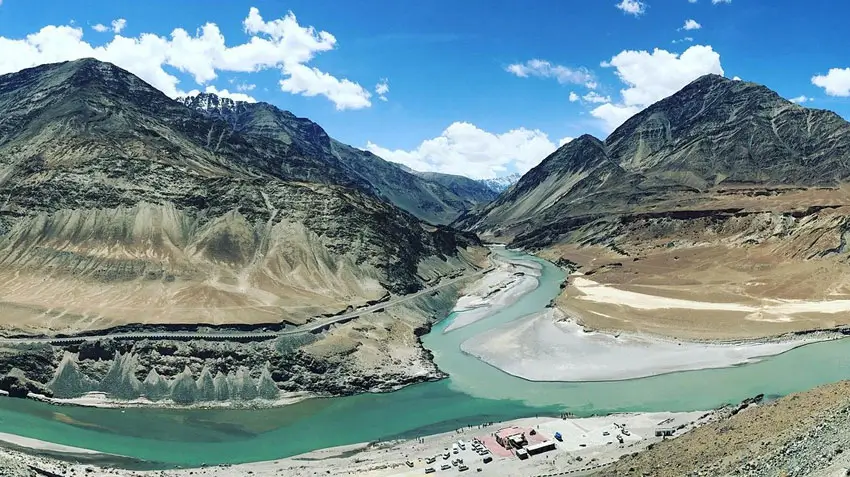
The Indus River carries immense cultural and historical weight. It flows from Tibet through Ladakh before continuing into Pakistan, shaping civilizations along its course for millennia. The very name “India” originates from the Indus.
In Ladakh, the river threads through wide valleys flanked by barren mountains and ancient monasteries. From the banks, travelers see villages that appear almost sculpted into cliffs, green barley fields contrasting against desert tones, and prayer flags fluttering against deep blue skies.
Cruising along this river reorients perspective. Instead of seeing Ladakh from highways and passes, guests experience it from the heart of its lifeline.
The river also intersects with Buddhist heritage. Monasteries such as Thiksey and Hemis overlook its waters, offering dramatic views from both land and boat. The spiritual and geographic alignment of river and monastery deepens the journey’s meaning.
The Indus is not merely a scenic feature. It is a narrative thread connecting landscape, culture, and identity.
Discover a unique side of Ladakh with exclusive travel experiences beyond the ordinary. From scenic landscapes to carefully curated journeys, we help you plan a comfortable and unforgettable luxury trip.
Chat On WhatsApp Contact UsOperating a luxury houseboat in Ladakh is vastly different from doing so in temperate regions. Altitude, temperature fluctuations, and seasonal river conditions demand meticulous engineering.
Modern Indus houseboats are designed with insulated structures, climate control systems, and stabilized hulls to accommodate varying currents. Interiors often draw inspiration from Ladakhi craftsmanship — handwoven textiles, carved wood accents, and minimalist design reflecting the surrounding terrain.
Guest cabins maintain hotel-grade comfort with en-suite facilities, heated floors, and panoramic windows framing riverbanks.
Unlike lake houseboats that remain stationary, the Indus cruise involves controlled navigation through selected stretches of the river. This adds an expedition element while maintaining comfort.
Evenings often include curated dining experiences featuring regional Ladakhi ingredients interpreted through contemporary culinary techniques.
The result is a rare combination of mobility and refinement — high-altitude luxury without sacrificing immersion.
Ladakh’s drama is often perceived from elevated passes. Travelers drive through valleys, stopping for photographs at designated points. The Indus River Cruise shifts this dynamic entirely.
From the deck of a houseboat, the landscape unfolds slowly. Mountain ridges reflect on calm waters. Monasteries appear suspended above cliffs. Small villages emerge quietly as the boat approaches.
Wildlife encounters add subtle excitement. Migratory birds, riverbank livestock, and occasional glimpses of Himalayan fauna create layered observation opportunities.
The gentle movement of water contrasts with the ruggedness of surrounding terrain. This juxtaposition defines the cruise experience.
Photography takes on new dimensions. Reflections, low-angle compositions, and uninterrupted horizon lines create cinematic visuals unavailable from roadside vantage points.
The river becomes both mirror and guide.
A well-designed Indus River Cruise itinerary extends beyond passive observation. Shore excursions form integral components of the journey.
Guests disembark to explore:
These excursions remain intimate and carefully timed to avoid congestion. Interactions with monks, artisans, and farmers provide context beyond surface tourism.
The cruise format allows cultural visits without repeated hotel transfers. Guests return to the same floating suite each evening, enhancing comfort and continuity.
This integration of movement and immersion elevates the cruise from scenic novelty to cultural expedition.
There is something inherently calming about water travel. In Ladakh, where terrain can feel stark and intense, floating softens perception.
The slow pace of a Ladakh luxury river cruise counters the urgency often associated with high-altitude itineraries. Travelers acclimatize gradually, resting between excursions rather than constantly packing and relocating.
The river introduces rhythm. Sunrise on deck, afternoon excursions, evening reflections — each day unfolds with measured consistency.
For travelers who value mindfulness and reflective travel, this format provides mental clarity alongside visual grandeur.
The Indus River is navigable during specific months when water levels are stable. Seasonal timing influences both comfort and safety.
Clear skies enhance mountain visibility. Cooler evenings add romance to deck dinners. Wind patterns shape navigation schedules.
Professional planning ensures optimal alignment with climatic conditions.
Given the limited number of houseboats and short operational windows, advance reservations are essential.
The exclusivity inherent in the format reinforces its luxury positioning.
Operating within a fragile ecosystem demands responsibility. Modern Indus houseboats incorporate eco-sensitive waste management systems, minimal shoreline disturbance, and fuel-efficient engines.
Excursion planning respects monastery rituals and village privacy. Visitor numbers remain intentionally low to preserve authenticity.
Guests are briefed on environmental etiquette, reinforcing shared responsibility.
The Indus River Cruise experience positions luxury within ecological awareness rather than excess.
Step into a world of serene landscapes and unique luxury experiences in Ladakh. From peaceful river journeys to carefully curated travel moments, enjoy a trip designed for comfort, exclusivity, and unforgettable memories.
Chat On WhatsApp Contact UsTraditional Ladakh itineraries involve lodge transfers across valleys. While immersive, they can feel logistically repetitive.
The cruise format simplifies transitions. Guests unpack once and move fluidly along the river corridor.
Land-based safaris offer altitude and desert immersion. River-based journeys offer perspective and continuity.
Many travelers now combine both — beginning with a Srinagar–Leh overland journey and concluding with the Indus cruise.
This layered approach enriches the overall Himalayan narrative.
Ladakh’s popularity has grown steadily. Increased accessibility through improved roads and air connectivity expands visitor numbers.
In such an environment, experiences that limit capacity and enhance exclusivity become more valuable.
The Indus River Cruise in Ladakh stands at the intersection of innovation and preservation. It offers novelty without spectacle, luxury without overdevelopment.
As travelers seek destinations that feel rare rather than replicated, this format aligns perfectly with emerging preferences.
It is a luxury houseboat journey along selected stretches of the Indus River in Ladakh
Yes, when operated by experienced crews with acclimatization planning.
It varies, typically spanning several nights with shore excursions.
Yes, luxury cabins include en-suite facilities and climate control.
Operational windows depend on river conditions and weather stability.
Yes, though pacing and altitude awareness are important.
Ladakh’s version focuses on expedition-style movement rather than stationary stays.
Yes, curated cultural excursions form part of the itinerary.
Leading operators maintain eco-sensitive protocols.
Yes, due to limited capacity and short operating seasons.