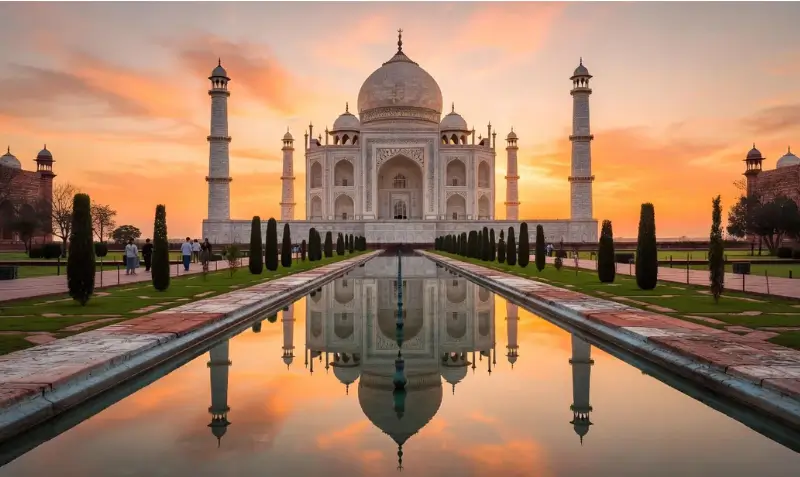
The Taj Mahal is one of the world's most admired architectural masterpieces and remains the most visited monument in India. Recognized for its extraordinary beauty, remarkable craftsmanship, and fascinating history, it attracts millions of travelers from every corner of the globe. Whether you are planning your first journey to India or including Agra in a longer itinerary through Delhi, Jaipur, and Rajasthan, visiting the Taj Mahal is an experience that leaves a lasting impression.
Commissioned by the Mughal Emperor Shah Jahan as a tribute to his beloved wife Mumtaz Mahal, the monument represents one of the finest examples of Mughal architecture ever constructed. Built from brilliant white marble and decorated with intricate carvings, semi-precious stone inlay work, elegant calligraphy, and perfectly symmetrical gardens, the Taj Mahal reflects centuries of artistic excellence and engineering precision.
While photographs of the monument are instantly recognizable, nothing compares to seeing it in person. The changing colors of the marble throughout the day, peaceful reflecting pools, beautifully maintained gardens, and the calm atmosphere surrounding the monument create an unforgettable experience for every visitor. The Taj Mahal appears slightly different at sunrise, during bright afternoon light, and once again as the sun begins to set, giving travelers unique photographic opportunities throughout the day.
Despite its worldwide popularity, many first-time visitors arrive without fully understanding practical details such as Taj Mahal ticket booking, entry procedures, opening hours, dress recommendations, security regulations, and the best time to visit. A little preparation can save valuable time, reduce unnecessary stress, and help visitors enjoy one of India's greatest cultural treasures without confusion.
Whether you are traveling independently, joining a guided tour, or combining Agra with the famous Golden Triangle Tour, understanding how to plan your visit properly allows you to appreciate both the historical significance and architectural brilliance of this UNESCO World Heritage Site.
Don’t let queues, wrong timings, or missed details take away from your Taj Mahal experience. Plan your visit with the right timing, private transport, and expert local guidance for a smoother and more memorable Agra journey.
Chat On WhatsApp Contact UsThe Taj Mahal is much more than a famous tourist attraction. It represents one of the greatest achievements of Mughal architecture and continues to symbolize love, artistic perfection, and cultural heritage. Every detail of the monument was carefully planned, resulting in extraordinary symmetry that continues to impress architects, historians, and travelers alike.
Construction involved thousands of craftsmen, artists, stone carvers, calligraphers, and engineers from different parts of Asia. White marble transported from Rajasthan forms the primary structure, while colorful gemstones were carefully embedded into the marble using intricate inlay techniques that remain remarkably well preserved today.
Visitors entering through the grand southern gateway experience one of the world's most dramatic architectural reveals. The first complete view of the brilliant white mausoleum framed by gardens and reflecting pools is a moment many travelers remember long after returning home. Walking slowly toward the monument allows visitors to appreciate changing perspectives, perfect geometric alignment, and countless decorative details often overlooked in photographs.
Inside the mausoleum lies the symbolic resting place of Shah Jahan and Mumtaz Mahal, while the actual tombs remain in a lower chamber. Although photography is restricted inside certain areas, visitors can admire remarkable marble lattice screens, delicate carvings, and peaceful interiors reflecting Mughal artistic traditions.
The surrounding complex is equally impressive. Beautiful gardens based on Persian design principles divide the landscape into symmetrical sections connected by water channels and pathways. On one side stands an elegant mosque constructed from red sandstone, while an identical building balances the opposite side of the complex, reinforcing the architectural harmony that defines the entire site.
The nearby Yamuna River provides another unique perspective of the monument. Across the river, visitors can admire panoramic views of the Taj Mahal from Mehtab Bagh, a historic garden particularly popular with photographers seeking less crowded viewpoints.
The monument's appearance changes continuously as natural light shifts throughout the day. Soft morning sunlight gives the marble a delicate glow, bright midday light emphasizes intricate carvings, and evening sunshine creates warm golden reflections before gradually fading into softer shades. This remarkable interaction between architecture and natural light explains why many visitors spend several hours exploring the complex rather than rushing through it.
Planning your visit begins with understanding the Taj Mahal ticket system and entry procedures. Purchasing tickets in advance is highly recommended, particularly during weekends, public holidays, and the peak tourist season when visitor numbers increase significantly. Online booking often reduces waiting time and provides a smoother arrival experience.
The Taj Mahal welcomes visitors on most days of the week, remaining closed on Fridays for regular tourist visits because the mosque within the complex is used for prayers. Travelers planning multi-city itineraries should remember this important schedule while organizing their journey through Delhi, Agra, and Jaipur.
Visitors should arrive early, especially if planning a sunrise visit. Early morning entry offers several advantages, including cooler temperatures, softer lighting for photography, and fewer crowds. Arriving before the main tourist groups allows visitors to enjoy the gardens and marble pathways in a quieter atmosphere.
Security procedures are thorough. All bags pass through screening, and certain items may not be permitted inside the monument. Carrying only essential belongings makes the entry process quicker and more convenient. Large backpacks, drones, tripods, food items, tobacco products, and several other restricted objects should be left at the hotel whenever possible.
Comfortable walking is an important consideration because visitors spend considerable time exploring gardens, pathways, viewing platforms, and surrounding structures. Many areas involve extended walking rather than climbing, making comfortable footwear an important part of planning the visit.
Guided tours are available for travelers wishing to understand the monument's architectural details and historical background in greater depth. Professional guides explain the symbolism behind decorative elements, construction techniques, and fascinating stories associated with Shah Jahan, Mumtaz Mahal, and the Mughal Empire, helping visitors appreciate features that might otherwise go unnoticed.
Many travelers combine their visit with nearby attractions such as Agra Fort, Itmad-ud-Daulah, and Mehtab Bagh, creating a full day of sightseeing that showcases Agra's extraordinary Mughal heritage. Those following the famous Golden Triangle Tour often spend one night in Agra before continuing toward Jaipur, allowing enough time to experience the Taj Mahal without rushing.
One of the most common questions travelers ask is whether the Taj Mahal is best experienced at sunrise or sunset. The answer depends on your travel style, photography preferences, and the type of atmosphere you hope to enjoy. Both times offer remarkable views of the monument, but each creates a distinctly different experience.
A sunrise visit to the Taj Mahal is widely regarded as the finest option for first-time visitors. Arriving early allows you to enter before the largest tour groups, resulting in a quieter and more peaceful environment. The cool morning air, gentle sunlight, and soft golden glow on the white marble create breathtaking scenery that photographers and travel enthusiasts appreciate. As the sun gradually rises, the marble changes from pale grey to warm gold before becoming bright white, providing a unique visual experience that cannot be replicated later in the day.
Morning visits are also more comfortable during warmer months because temperatures remain pleasant. Visitors have enough time to explore the gardens, admire the detailed marble work, and take photographs without feeling rushed. Since the monument is less crowded in the early hours, capturing unobstructed images becomes much easier.
A sunset visit, on the other hand, offers a completely different atmosphere. As the day draws to a close, the marble reflects softer shades of cream, pink, and light orange. The surrounding gardens become quieter than during the afternoon, and the changing light creates dramatic contrasts that appeal to landscape photographers. Although sunset can be spectacular, visitor numbers are often higher than at sunrise because many tourists arrive later in the day after completing sightseeing in Agra.
For travelers with flexible schedules, sunrise generally provides the most rewarding overall experience. However, those interested in observing the monument under changing light conditions may find value in visiting nearby Mehtab Bagh during sunset, where panoramic views across the Yamuna River offer a different perspective of the Taj Mahal without entering the main complex again.
Regardless of the chosen time, allocating at least two to three hours for the visit ensures sufficient opportunity to appreciate the monument's architecture, gardens, and surrounding structures without rushing through one of India's most celebrated landmarks.
Let local experts handle the practical details—from private transfers and ideal visiting times to guided sightseeing—so you can simply enjoy the beauty, history, and emotion of the Taj Mahal.
Chat On WhatsApp Contact UsChoosing appropriate clothing enhances both comfort and the overall experience when visiting the Taj Mahal. Since visitors spend several hours walking through gardens, marble pathways, and open courtyards, lightweight and comfortable clothing is generally the best choice. During warmer months, breathable fabrics help visitors remain comfortable, while light jackets or sweaters may be useful during cool winter mornings.
Although there is no strict dress code for tourists, modest clothing is recommended out of respect for the cultural and historical significance of the monument. Comfortable walking shoes are essential because exploring the extensive complex involves considerable walking. Sunglasses, sunscreen, and a reusable water bottle are also useful, especially during sunny weather.
Photography is one of the highlights of visiting the Taj Mahal. The central reflecting pool near the main entrance offers one of the most iconic viewpoints, while the surrounding gardens provide numerous opportunities to capture the monument from different angles. Early morning light produces soft shadows and fewer crowds, making it easier to compose memorable photographs.
Visitors should also spend time observing the intricate marble carvings, floral inlay work, elegant calligraphy, and perfectly symmetrical design rather than focusing only on wide-angle photographs. These remarkable details reflect the extraordinary craftsmanship that has made the Taj Mahal one of the world's greatest architectural achievements.
To make the most of the visit, purchasing tickets in advance, arriving early, carrying only essential belongings, and checking local weather forecasts are all worthwhile preparations. Hiring a knowledgeable guide can also provide fascinating historical insights that add depth to the experience beyond simply admiring the monument's beauty.
Most travelers combine the Taj Mahal with nearby attractions such as Agra Fort, Itmad-ud-Daulah, and Mehtab Bagh, creating a full day of exploring Agra's Mughal heritage. Those traveling on the Golden Triangle Tour frequently continue onward to Jaipur, making the Taj Mahal a central highlight of one of India's most popular travel routes.
Whether admired during the first light of dawn or beneath the warm colors of the evening sky, the Taj Mahal remains an unforgettable destination that rewards careful planning, thoughtful exploration, and enough time to appreciate its timeless beauty.
Early morning is generally considered the best time because temperatures are cooler, crowds are smaller, and the soft sunlight creates beautiful photography conditions.
No. The monument is generally closed to regular visitors on Fridays, except for those attending prayers at the mosque.
Most visitors spend between two and three hours exploring the monument, gardens, surrounding buildings, and photography viewpoints.
Yes. Purchasing Taj Mahal tickets online is recommended because it helps reduce waiting time and makes entry more convenient.
Comfortable, modest clothing and walking shoes are recommended. Weather-appropriate layers may be useful during winter mornings.
Photography is permitted in most outdoor areas, although restrictions apply inside certain sections of the mausoleum. Visitors should always follow instructions provided by monument staff.
Security regulations restrict several items. Carrying only essential belongings makes the entry process faster and more convenient.
Many travelers also visit Agra Fort, Itmad-ud-Daulah, and Mehtab Bagh during the same day.
Yes. Families regularly visit the monument, and the spacious gardens provide a comfortable environment for visitors of all ages.
Absolutely. The Taj Mahal is commonly included in the Golden Triangle Tour, which connects Delhi, Agra, and Jaipur, making it an excellent addition before beginning or continuing a journey through Rajasthan.