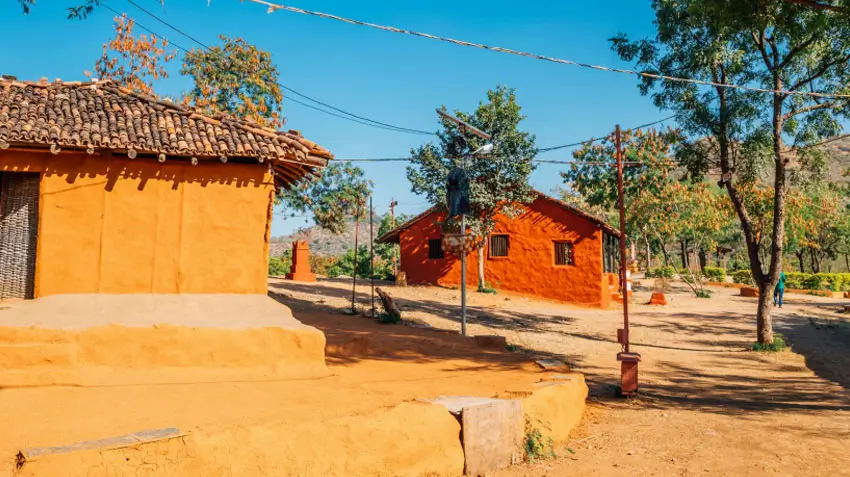
When most international travelers imagine Rajasthan, the first images that appear are grand forts, ornate palaces, camel caravans, and luxury heritage hotels. While these are powerful and iconic representations, they form only one layer of Rajasthan’s identity. The deeper foundation of the region lies in its villages. More than two-thirds of Rajasthan’s population resides in rural settlements, and these communities preserve traditions, crafts, agricultural practices, and social systems that have existed for centuries.
A true Rajasthan village tour experience is not about spectacle. It is about observing how history continues to function in daily life. In cities, heritage is preserved inside monuments. In villages, heritage is lived. Architectural forms, food habits, dress patterns, marriage customs, and religious practices continue in rhythm with seasonal cycles rather than tourism calendars.
Understanding rural Rajasthan is essential if one wishes to understand Rajasthan as a whole. Forts were built by rulers, but villages were built by the communities that sustained those kingdoms. Agriculture supplied royal courts. Craft communities produced textiles and weapons. Pastoral groups managed livestock across desert landscapes.
A well-organized rural Rajasthan tour reveals this ecosystem. It connects travelers to the roots of the region rather than just its royal façade. It transforms Rajasthan from a visual experience into a cultural one.
One of the biggest misconceptions about a Rajasthan village safari is assuming uniformity. Rajasthan is geographically diverse. Western Rajasthan is arid and desert-dominated. Southern Rajasthan is forested and tribal. Eastern Rajasthan contains fertile agricultural belts. Northern Rajasthan has semi-arid plains.
In western desert districts such as Jaisalmer and Barmer, villages are structured for survival in harsh climates. Water conservation defines architecture. Circular huts with thatched roofs known as “dhanis” are designed to maintain internal temperature. Livelihood centers around livestock—especially camels, goats, and sheep.
In contrast, villages near Jodhpur inhabited by the Bishnoi community reflect a different value system. The Bishnois are historically known for wildlife protection and tree conservation. Here, blackbuck antelopes roam near agricultural fields. Wildlife is integrated into village life rather than separated from it.
In southern districts like Dungarpur and Banswara, tribal Bhil communities dominate. Their villages reflect distinct tribal culture, including wooden architecture, forest-based agriculture, and unique festival traditions.
Near Jaipur and Shekhawati regions, craft villages focus on block printing, pottery, or fresco painting.
Therefore, choosing the right Rajasthan cultural village experience depends on what you want to understand—desert survival, wildlife conservation, tribal heritage, or rural craft systems.
Discover the real charm of Rajasthan beyond cities with immersive village tours. From traditional homes and local culture to rural landscapes and warm hospitality, enjoy a unique and unforgettable travel experience.
Chat On WhatsApp Contact UsA defining element of a Rajasthan village tour is architecture. Unlike urban homes constructed from standardized materials, village houses are built using locally sourced resources and adapted to environmental needs.
In desert areas, thick mud walls provide insulation from extreme heat. Roofs made of grass, mud, and wooden beams regulate internal temperatures. Small windows reduce dust intrusion.
In agricultural regions, homes are rectangular and organized around central courtyards. The courtyard functions as a multi-purpose space for cooking, grain drying, family gatherings, and livestock feeding.
Storage rooms are common, reflecting seasonal agricultural cycles. Wells or community water points serve as social hubs.
Walls are often decorated with lime-based white paint and natural pigments. Motifs may represent religious symbols, animals, or geometric patterns passed down through generations.
Observing architecture in a Rajasthan rural life experience offers insight into adaptation, not aesthetics alone. It shows how environment shapes design.
Understanding economic systems is central to a meaningful village tour in Rajasthan. Rural livelihoods are traditionally structured around agriculture, livestock, and crafts.
In fertile regions, crops such as wheat, mustard, and millet dominate. Farming is often seasonal, dependent on monsoon patterns.
In desert regions, pastoralism is more common. Camels and goats provide milk, wool, and transportation.
Craft-based villages specialize in block printing, pottery, weaving, or embroidery. These skills are often hereditary. Knowledge passes from parent to child.
Village markets operate weekly, connecting rural producers with nearby towns.
Modern influences such as mobile connectivity and road infrastructure have gradually changed economic structures. Some younger villagers migrate to cities for employment while maintaining ties to ancestral homes.
A Rajasthan village safari experience reveals how tradition and modernization coexist.
What You Actually Experience During a Village Tour
A properly structured Rajasthan village tour experience typically begins with a short drive from a nearby city such as Jodhpur or Jaisalmer. The journey itself provides transition from urban density to rural openness.
Upon arrival, your guide introduces the village context. You may walk through narrow lanes lined with mud or stone houses. Livestock enclosures are visible. Women may be drawing water or preparing food. Children may be returning from school.
In craft villages, artisans may demonstrate weaving or pottery production. In Bishnoi villages, wildlife sightings may occur during jeep drives.
The experience is observational and interactive. It is not scripted.
Conversations often happen through translation. Topics may include marriage customs, education access, crop cycles, and family structures.
The pace feels slower. Silence is more prominent. There are no ticket counters or crowd control barriers.
This authenticity defines the rural Rajasthan cultural experience.
The Bishnoi village safari near Jodhpur remains one of the most structured rural experiences. Bishnoi principles include protection of trees and wildlife. Visitors may see blackbuck antelopes grazing freely.
Jeep safaris include visits to pottery households and traditional weaving families. Artisans demonstrate techniques passed through generations.
This experience blends wildlife observation with rural culture, creating layered understanding.
It is typically half-day and fits seamlessly into Jodhpur itineraries.
In western Rajasthan, desert villages offer exposure to extreme climate adaptation. Sandstone architecture, water conservation systems, and livestock-centered life define these settlements.
Visitors may observe embroidery artisans whose work is often sold in urban boutiques. Camel herders manage livestock across open dunes.
Pairing a desert village experience in Rajasthan with a luxury desert camp creates contrast between rural simplicity and curated tourism.
Explore the untouched beauty of Rajasthan’s villages where traditions are still alive. Experience local lifestyle, interact with villagers, enjoy authentic cuisine, and witness the true cultural soul of India away from the crowds.
Chat On WhatsApp Contact UsEthical travel is essential. A responsible Rajasthan rural tourism experience should prioritize dignity. Avoid treating villages as poverty exhibits.
Choose operators who maintain long-term relationships with communities. Ensure visits are consensual and economically beneficial.
Photography must be respectful. Donations should be guided by local recommendation rather than impulse.
Responsible tourism ensures cultural preservation rather than exploitation.
Village tours work best as half-day extensions from major cities. They should complement palace sightseeing rather than replace it.
Traveling with a private driver in Rajasthan ensures smooth routing. Early morning visits are often preferable before heat intensifies.
Combining urban heritage, wildlife safari, and rural immersion creates a balanced Rajasthan experience.
For arranging a deeply immersive and responsibly managed Rajasthan village tour experience, including Bishnoi safaris, desert settlements, or tribal village visits, you can contact:
Vikas Khabrani
Owner – Royal Rajasthan Travels
Call / WhatsApp: +91-9414046260
Email: info.royalrajasthan@gmail.com
He can curate authentic rural experiences aligned with your overall Rajasthan itinerary.
A guided visit to rural communities showcasing authentic daily life.
Bishnoi villages near Jodhpur are most structured.
Yes, when conducted respectfully and responsibly.
Camel herders, mud architecture, and embroidery crafts.
Yes, through guide-facilitated conversations.
Yes, architecture and culture vary by region.
Usually half-day.
Only with consent.
Yes, when professionally arranged.
Vikas Khabrani at Royal Rajasthan Travels can assist.