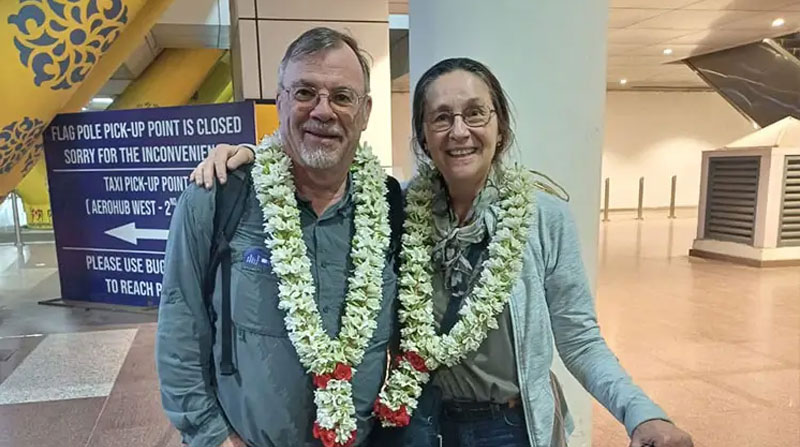
For two international travellers, a private journey through India can be surprisingly good value when compared with private touring in many other parts of the world. A couple can have their own air-conditioned vehicle, professional driver, private local guides, comfortable hotels and door-to-door transfers without paying the type of private-tour prices often associated with Europe or North America. At the same time, India has an enormous range of accommodation and services, which means the total price can change dramatically according to the standard selected.
A realistic private India tour cost for two people can begin around ₹18,000–₹25,000 per day for a value-focused private journey using straightforward hotels and a sedan. A comfortable private holiday with good three-star, boutique or four-star accommodation can commonly cost around ₹25,000–₹40,000 per day for two people once hotels, private road transport, guides, sightseeing tickets, meals and normal daily expenses are considered.
Premium private travel can move towards ₹40,000–₹65,000 per day for two, while luxury travel can exceed ₹70,000–₹100,000 per day very easily. When top palace hotels, premium suites, private experiences and luxury dining are involved, there is effectively no useful upper ceiling.
For a ten-day private journey, two people might therefore spend around ₹200,000–₹350,000 at a comfortable level. A two-week trip can realistically sit around ₹280,000–₹450,000. A longer three-week journey can move towards ₹400,000–₹650,000 or substantially higher depending on hotel standards and the amount of domestic flying involved.
The phrase India private tour package can therefore describe completely different holidays. One quotation may contain modest hotels, a sedan and breakfast. Another may contain heritage hotels, an Innova Crysta, private guides, domestic flights and premium activities. Comparing the headline totals without examining these components gives very little useful information.
The most practical approach is to separate the journey into accommodation, road transport, domestic travel, professional guides, entrance tickets, meals and paid activities. That shows exactly where the money goes and makes it easier for international visitors to set a realistic budget before arriving.
The first useful figure is the daily cost for two people travelling together and sharing one hotel room.
At the value-focused end, approximately ₹18,000–₹25,000 per day for two can provide clean accommodation, private road transport on suitable sectors, hotel breakfast and a reasonable allowance for food and sightseeing. The exact figure depends strongly on whether the journey remains within one region or requires domestic flights.
At approximately ₹25,000–₹40,000 per day for two, travellers can expect much greater flexibility. Hotels can be stronger, private guides can be used regularly, restaurant selection becomes easier and there is enough budget for entrance tickets and selected paid experiences.
A comfortable ten-day example might look like this:
| Expense for Two | Approximate Cost |
| 9 nights of comfortable hotels | ₹80,000–₹120,000 |
| Private car and driver | ₹55,000–₹80,000 |
| Professional local guides | ₹12,000–₹20,000 |
| Sightseeing tickets | ₹15,000–₹25,000 |
| Lunches and dinners | ₹30,000–₹50,000 |
| Activities and contingency | ₹25,000–₹40,000 |
| Approximate Total | ₹217,000–₹335,000 |
This is a realistic India tour cost for a couple when the journey is concentrated in a road-friendly region such as Delhi, Agra and Rajasthan.
If the same ten-day journey includes flights to Varanasi, Mumbai, Kerala or another distant region, domestic airfare and airport transfers need to be added. Two or three internal flight sectors can increase the cost by tens of thousands of rupees depending on date, baggage allowance and booking conditions.
The daily cost can also decrease slightly on longer road journeys because the fixed cost of airport pickups and certain services is spread across more days. Accommodation, however, continues to accumulate every night.
Two people also benefit financially from sharing.
A private car that costs ₹6,000 for the day costs the same whether one guest or two guests are sitting inside it. A ₹10,000 hotel room also costs approximately the same for single or double occupancy in many cases, although meal and tax conditions can differ.
This makes private India travel for two people much more economical per person than solo private touring.
For example, a ₹300,000 trip for two equals ₹150,000 per person. The same journey for one traveller would not necessarily fall to ₹150,000 because the hotel room and vehicle still have to be paid for.
Couples and friends sharing a room therefore receive particularly strong value from private travel.
Travelling as a couple? Enjoy the freedom of a private car, comfortable hotels, personal local guides and a flexible itinerary designed around your pace—not a fixed group schedule.
Chat On WhatsApp Contact UsAccommodation is normally the largest variable in the final tour price.
India has rooms at almost every imaginable price level. International travellers can find basic accommodation for a few thousand rupees per night, comfortable hotels around ₹6,000–₹12,000, strong boutique and heritage properties around ₹10,000–₹20,000, and luxury hotels costing ₹25,000–₹60,000 or far more.
For a comfortable private journey, approximately ₹7,000–₹12,000 per room per night is a useful working range in many popular destinations. Certain cities and high-demand dates can cost more.
Nine nights at ₹8,000 cost ₹72,000.
Nine nights at ₹12,000 cost ₹108,000.
Nine nights at ₹20,000 cost ₹180,000.
Nine nights at ₹40,000 cost ₹360,000.
The destination list has not changed, but the hotel choice has changed the total holiday price by hundreds of thousands of rupees.
Rajasthan provides a particularly clear example because international visitors can choose between ordinary city hotels, restored mansions, boutique heritage properties, forts, palace hotels and internationally recognised luxury resorts.
Delhi also has a very broad price range. Location matters because a cheaper room on the edge of the city can create significant additional driving through traffic.
Agra can offer good mid-range value, while premium hotels close to the Taj Mahal can cost much more.
Mumbai is commonly more expensive for comparable city accommodation than many smaller Indian destinations. High-quality hotels in popular parts of the city can consume a larger percentage of the daily budget.
Varanasi presents a different issue. Properties close to the Ganges or offering premium river views can cost significantly more than accommodation away from the riverfront.
The same pattern appears in other major tourism centres. Location, not simply star classification, influences the hotel cost in an India private tour.
Season adds another layer. Cooler high-demand periods can raise prices across North India, while Christmas, New Year, festivals and major events can produce substantial supplements. Rajasthan wedding dates can affect individual palace and heritage properties dramatically.
International travellers should therefore request exact hotel names and room categories.
A quotation saying "four-star hotels" is not detailed enough. The difference between two four-star properties can easily be ₹5,000 per night. Across fourteen nights, that is a ₹70,000 difference.
Private road transport is one of the strongest reasons to choose a customised India holiday.
For a couple travelling through Delhi, Agra and Rajasthan, a sedan generally provides enough space and keeps the private driver India cost relatively economical.
A sedan on a multi-day road circuit can commonly work around ₹4,500–₹6,000 per touring day when considered as a complete arrangement. The exact rate depends on total kilometres, route and inclusions.
An Innova-class vehicle may cost approximately ₹6,000–₹9,500 per touring day.
For a ten-day road journey, a sedan might therefore cost around ₹50,000–₹65,000, while an Innova or Innova Crysta can cost approximately ₹65,000–₹90,000.
For two travellers, the sedan usually offers the best financial value. An Innova becomes attractive when the couple carries several large suitcases or wants additional space during long highway sectors.
The quotation should make clear whether fuel, driver allowance, tolls, parking and interstate charges are included.
Commercial vehicles can be priced according to kilometres, and minimum daily kilometre conditions may apply. Garage-to-garage mileage can also affect the total.
This becomes particularly important on one-way journeys.
Suppose travellers begin in Delhi and finish their road journey in Udaipur before flying to Mumbai. The guests no longer need the car after Udaipur, but the operator may still need to return or reposition the vehicle. That commercial movement can form part of the transport price.
A professional driver provides door-to-door transportation, practical road assistance and continuity throughout the journey. Travellers do not need to find a new taxi after every hotel checkout.
The same driver can normally handle intercity transfers and local sightseeing movements within the agreed schedule.
However, a private driver is not the same as a professional local guide.
Drivers may know the roads, restaurants, practical stops and general local information extremely well. Detailed historical interpretation inside major monuments should come from qualified local guides.
For two people, using both services selectively can provide excellent value without making the journey unnecessarily expensive.
India contains some of the world's most historically significant monuments, and private guiding can make a substantial difference to the quality of a visit.
An English-speaking local guide can commonly cost around ₹1,500–₹3,500+ per sightseeing day, depending on city, duration and service. Specialist guides and guides speaking other foreign languages can cost more.
There is rarely a need to pay for a guide every day.
Road-transfer days, relaxed market visits and free days may not require professional guiding. Guides are most valuable in historically dense destinations where travellers are visiting several major monuments.
Delhi is a good example. A sightseeing day can move through Sultanate, Mughal, colonial and modern history. Without context, the day can become a collection of unrelated buildings.
Agra benefits strongly from professional guiding at the Taj Mahal and Agra Fort.
Jaipur has enough historical depth at Amer Palace, City Palace and Jantar Mantar to justify a knowledgeable local guide.
Jodhpur, Udaipur and Jaisalmer also benefit from guiding when travellers want more than photographs.
For a ten-day North India journey, using guides on four or five sightseeing days might cost approximately ₹8,000–₹15,000.
A longer two-week journey could require ₹12,000–₹22,000 depending on the number of guided destinations.
Entrance fees can cost more than guide services.
Foreign visitor prices at many major Indian monuments are higher than domestic admission rates. The Taj Mahal, forts, palaces, museums and archaeological sites can therefore create a meaningful sightseeing bill.
For two people on a substantial ten-day North India journey, approximately ₹15,000–₹25,000 is a useful allowance for paid sightseeing.
A two-week journey involving many monuments can move towards ₹20,000–₹35,000.
Premium palace sections, special museum access and certain experiences can increase the amount further.
International travellers comparing India private tour prices should always check whether monument fees are included. A package that excludes every ticket can look much cheaper than a quotation where the major admissions have already been built into the price.
India's size makes transport strategy extremely important.
A private car works particularly well across Delhi, Agra, Jaipur and much of Rajasthan because the cities can be linked by road. The same logic does not apply when a traveller wants to combine Rajasthan with Mumbai, Kerala or another distant region.
Trying to cover enormous distances by private car can waste valuable holiday days.
Domestic flights become necessary on many multi-region journeys.
A realistic working allowance for a domestic flight can be around ₹5,000–₹12,000 per person per sector, although fares can move below or far above this range depending on date, route, baggage and booking conditions.
For two travellers taking three domestic flights, even an average fare of ₹8,000 per person per sector creates a flight bill of ₹48,000.
Airport transfers then need to be added.
This explains why a ten-day Rajasthan road journey and a ten-day multi-region India journey can have very different prices even when the hotel standards are identical.
Trains can reduce costs on suitable routes.
However, international travellers should compare convenience as well as ticket price. A train journey may require hotel-to-station transport, luggage handling and another transfer on arrival.
Overnight trains can save one hotel night, but not every traveller wants to sacrifice a comfortable night's sleep during a private holiday.
Premium train classes can work well when the rail journey itself is convenient.
For a custom India tour for two, the strongest transport combination is often a private car for compact regional sectors and flights or carefully selected trains for long distances.
This keeps road travel comfortable without turning the holiday into a series of airport visits.
Food is one of the most flexible parts of an India travel budget.
If breakfast is included in the hotel rate, two international travellers can eat comfortably at good normal restaurants with approximately ₹2,500–₹4,500 per day for lunch and dinner.
Across ten days, that creates a food budget of roughly ₹25,000–₹45,000.
Across fourteen days, the figure becomes approximately ₹35,000–₹63,000.
This is enough for comfortable dining without selecting restaurants solely according to price.
Premium dining changes the calculation.
A couple eating regularly at five-star hotels, luxury resorts and fine-dining restaurants can easily spend ₹5,000–₹10,000 or more on one dinner. Alcoholic beverages can increase restaurant bills substantially.
A food-focused couple may therefore spend ₹70,000–₹100,000 across a two-week holiday while another couple spends half that amount and still eats very well.
For this reason, breakfast-only packages often provide better flexibility than full-board arrangements.
Travellers can choose where to eat according to the day's location and appetite.
Activities should receive a separate allowance.
Boat rides, desert experiences, cooking sessions, heritage walks, cultural performances and other paid experiences can add ₹20,000–₹40,000 to a couple's journey without difficulty.
A contingency reserve is also sensible.
For ten days, approximately ₹15,000–₹25,000 can cover tips, laundry, small transfers, snacks and minor unexpected expenses.
For two weeks or longer, keeping ₹25,000–₹40,000 available provides greater flexibility.
Shopping should never be included in a standard India holiday budget for two because spending varies enormously. Textiles, jewellery, art, handicrafts and luxury shopping can make personal expenditure almost unlimited.
Wondering what your India trip will really cost for two? Let our experts create a personalised journey with carefully selected hotels, private car and driver.
Chat On WhatsApp Contact UsA budget of approximately ₹300,000 for two people can create a very comfortable private North India holiday when international flights are excluded.
For a ten-to-twelve-day road-focused journey, a possible distribution might be:
| Expense | Approximate Amount |
| Hotels | ₹105,000 |
| Private sedan and driver | ₹70,000 |
| Professional guides | ₹15,000 |
| Monument tickets | ₹20,000 |
| Meals | ₹40,000 |
| Activities and contingency | ₹50,000 |
| Total | ₹300,000 |
This represents ₹150,000 per person when sharing a room.
The hotel average would be around ₹9,000–₹10,000 per night depending on duration, providing access to comfortable properties in many North Indian destinations.
A sedan would remain appropriate for two people, while professional guides could be concentrated in the major historical cities.
At ₹400,000–₹500,000 for two, stronger boutique and heritage hotels become easier to include. Travellers can upgrade the vehicle, use more private guides and spend more freely on restaurants and paid experiences.
At the luxury level, accommodation can consume ₹300,000–₹500,000 on its own. A palace suite or high-end resort room can cost ₹40,000–₹80,000 or substantially more per night.
This is why the term luxury private India tour should never be assigned one generic price.
Royal Rajasthan Travels can structure a private journey according to the actual standard the travellers want rather than using one fixed package category. Mr. Vikas Khabrani's experience with Rajasthan and North India travel is particularly useful when balancing hotel quality against road comfort and daily sightseeing. Spending ₹20,000 more on a larger vehicle may be worthwhile on a long Rajasthan road circuit, while the same money may be better used on accommodation during a shorter Golden Triangle journey.
Before paying for a private India trip, international travellers should receive a written quotation naming the hotels, room categories, meal basis, vehicle type, road expenses, guide services, monument tickets, domestic flights or trains, transfers, taxes and exclusions.
That information turns a vague package price into a realistic private India tour budget for two people.
A comfortable private journey can commonly cost around ₹25,000–₹40,000 per day for two people when accommodation, road transport, guides, sightseeing, meals and normal daily expenses are considered together. Domestic flights and luxury hotels can increase the figure substantially.
Approximately ₹200,000–₹350,000 for two people is a realistic comfortable range for a road-focused North India journey. Premium accommodation and internal flights can move the cost higher.
On a multi-day North India road circuit, a sedan can commonly work around ₹4,500–₹6,000 per touring day, while an Innova-class vehicle can cost around ₹6,000–₹9,500 depending on route, kilometres and inclusions.
A useful working range is approximately ₹7,000–₹12,000 per room per night for good mid-range accommodation in many tourism destinations. Major cities, premium locations and busy dates can cost more.
An English-speaking local guide can commonly cost approximately ₹1,500–₹3,500+ per sightseeing day. Specialist and foreign-language guides may cost more.
For a ten-day North India journey, two people can reasonably allow approximately ₹15,000–₹25,000 for major paid sightseeing. Longer journeys and premium palace access can increase the amount.
A useful working allowance is around ₹5,000–₹12,000 per person per sector, although fares vary considerably by route, date, baggage and booking conditions. Several flights can materially increase a private tour budget.
Yes. ₹300,000 can provide a very comfortable private North India journey for two people, particularly when the trip is road-focused and international airfare is excluded. Multi-region travel with several domestic flights may require more.
Per person, usually yes. Two travellers share the cost of one hotel room and one private vehicle. A solo traveller still has to pay most of those fixed expenses, making the per-person cost higher.
A detailed quotation should show the exact hotels, room categories, included meals, private vehicle, fuel, driver allowance, tolls, parking, guides, monument tickets, domestic flights or trains, airport transfers, taxes, payment conditions and exclusions. Those details allow travellers to judge the actual cost rather than relying on an advertised starting price.