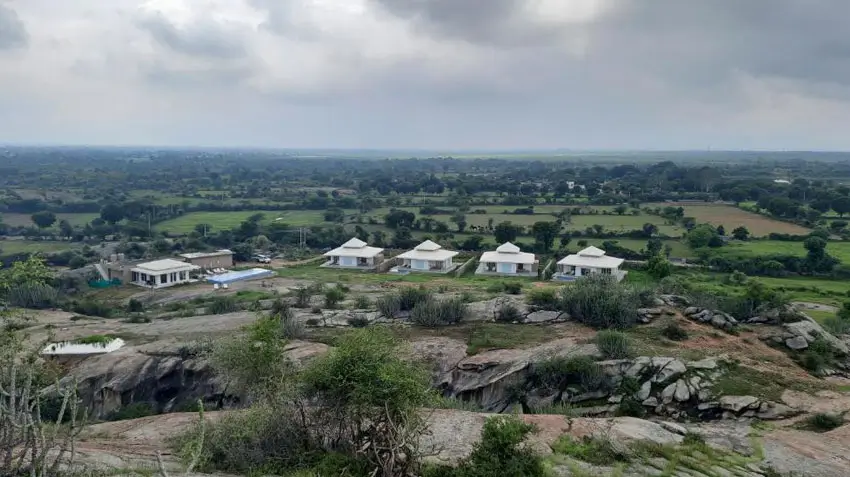
Luxury travel has entered a new phase. For decades, prestige was associated with visibility — iconic landmarks, famous hotels, and globally recognized routes. Today, the pendulum is swinging in the opposite direction. Affluent travelers increasingly seek silence, remoteness, and meaningful interaction over crowded photo points. The new marker of status is privacy. In Rajasthan, this transformation has elevated destinations such as Jawai, Bishnoi villages, and Barmer into what can only be described as anti-crowd ultra-luxury zones.
These regions are not unknown; they are intentionally understated. They exist beyond the predictable flow of Jaipur–Udaipur–Jodhpur circuits. They offer space rather than spectacle. The absence of mass tourism becomes the experience itself. Travelers are not competing for vantage points or navigating packed courtyards. Instead, they inhabit landscapes that feel unscripted and personal.
The phrase off-grid luxury Rajasthan reflects more than remoteness. It signals a deeper desire for authenticity without sacrificing comfort. The modern ultra-luxury traveler wants desert silence paired with refined design, rural immersion combined with curated service. Jawai, Bishnoi, and Barmer provide this balance in a way mainstream destinations cannot.
Jawai has quietly emerged as one of India’s most distinctive wildlife landscapes. Located between Jodhpur and Udaipur, this region is defined by towering granite outcrops rising from arid plains. Unlike traditional national parks, Jawai operates within a coexistence model where wildlife and local communities share terrain.
The presence of leopards has brought global attention, yet Jawai remains restrained in scale. Safari vehicles are limited. Lodges are small and design-focused. The emphasis is on privacy rather than volume. A Jawai luxury safari does not resemble crowded tiger reserves; it feels like private exploration.
Morning drives reveal leopards navigating rocky slopes bathed in golden light. Evenings unfold around campfires under expansive desert skies. The rhythm is unhurried. Time stretches.
Architecturally, Jawai’s camps and lodges blend minimalism with regional aesthetics. Canvas suites overlook wilderness without excessive ornamentation. Service remains attentive yet unobtrusive. This quiet elegance defines the region’s appeal.
Jawai’s power lies in its duality — wild yet controlled, remote yet accessible, rugged yet refined.
Step away from the usual tourist routes and explore authentic destinations, local culture, and hidden experiences. We help you plan a journey that feels unique, personal, and truly unforgettable.
Chat On WhatsApp Contact UsWhile Jawai offers wildlife immersion, the nearby Bishnoi villages of Rajasthan provide cultural depth rooted in environmental ethics. The Bishnoi community has practiced conservation principles for centuries, long before sustainability became a global trend.
Their reverence for wildlife, particularly blackbuck antelope and desert ecology, shapes daily life. Trees are protected. Hunting is forbidden. Community rituals emphasize coexistence rather than dominance over nature.
For ultra-luxury travelers seeking authenticity, visiting Bishnoi villages offers an encounter with living philosophy. This is not staged tourism. It is a cultural worldview maintained through discipline and belief.
Curated visits allow guests to engage respectfully with local artisans, observe pottery traditions, and understand desert survival strategies. These experiences feel intimate rather than performative.
Positioning Bishnoi interactions within sustainable luxury Rajasthan reframes travel as participation rather than observation.
Further west, near the Indo-Pak border, lies Barmer — a region rarely included in mainstream itineraries. Its landscape is raw and expansive, punctuated by sand dunes and mud-brick villages.
Barmer’s appeal rests in textile artistry. Hand-printed fabrics, embroidery, and block-print traditions define local identity. Visiting artisan workshops in this region feels markedly different from commercial craft markets elsewhere.
Production is intimate, family-driven, and slow.
For travelers who value craft authenticity, Barmer provides rare insight. Conversations with artisans reveal generational knowledge preserved without industrialization.
Accommodation options in Barmer remain limited but evolving. Private desert camps designed with minimal footprint create a sense of isolation that feels almost monastic. Silence dominates the horizon.
In positioning Barmer as part of anti-crowd luxury Rajasthan, the focus shifts from sightseeing to atmosphere. The desert’s emptiness becomes luxury itself.
Traditional luxury relied on abundance — chandeliers, ornate suites, bustling lobbies. Off-grid destinations redefine luxury through subtraction. The absence of noise, traffic, and constant connectivity becomes the reward.
In Jawai, silence is punctuated only by distant bird calls. In Bishnoi villages, the rhythm of rural life replaces urban urgency. In Barmer, horizon lines stretch uninterrupted.
Affluent travelers increasingly recognize that mental space carries higher value than visible opulence. The desert’s vastness invites introspection. The wilderness removes distraction.
This is not isolation for hardship’s sake. It is curated remoteness. High-thread-count linens, private chefs, and dedicated naturalists coexist with rugged landscapes.
Off-grid authenticity reframes what luxury means.
A defining advantage of Jawai and Barmer lies in limited infrastructure. There are no mega-resorts. No tour bus fleets. No mass ticketing systems.
Controlled capacity preserves exclusivity. It also protects ecological balance.
Travelers do not feel like participants in spectacle. They feel like temporary custodians of fragile environments.
The absence of overcrowding enhances service quality. Staff-to-guest ratios remain high. Guides adapt experiences based on interest rather than schedule pressure.
This model aligns with global shifts toward low-density luxury travel.
Architectural design plays a crucial role in shaping perception. In Jawai, lodges often adopt neutral palettes that mirror granite terrain. Interiors emphasize natural textures, handcrafted furniture, and understated elegance.
Barmer’s desert camps lean into minimalism. Canvas structures frame sunsets without artificial distraction. Lighting remains soft. The goal is immersion, not display.
Such design choices reinforce authenticity. Luxury feels integrated rather than imposed.
Travelers who value aesthetics appreciate how these properties avoid excessive ornamentation while maintaining comfort.
Off-grid travel requires respect. Visiting Bishnoi communities or remote desert villages demands humility. Structured visits ensure that interactions remain reciprocal rather than intrusive.
Travel planners must prioritize ethical engagement — fair compensation for artisans, minimal environmental footprint, and adherence to community norms.
Responsible ultra-luxury desert travel acknowledges that authenticity cannot be manufactured. It must be protected.
Explore untouched locations, local traditions, and meaningful travel experiences away from the crowds. Let us help you create a journey that connects you with the authentic essence of Rajasthan.
Chat On WhatsApp Contact UsAn integrated itinerary might begin in Udaipur’s lakes before transitioning into Jawai’s wilderness. From there, travelers can explore Bishnoi villages en route to Jodhpur, concluding with Barmer’s desert isolation.
The sequence moves from water to rock to sand — each landscape distinct, each offering different forms of stillness.
Private transfers ensure smooth transitions. The overall pacing remains deliberate, avoiding rushed checklists.
Such an itinerary appeals to travelers who have already seen Rajasthan’s headline attractions and now seek depth.
Crowds create anxiety. Noise disrupts reflection. Constant visibility reduces intimacy.
Anti-crowd destinations reverse these pressures. Travelers experience ownership of space. Time slows. Attention sharpens.
In Jawai, watching a leopard cross granite slopes feels cinematic precisely because no other vehicles compete for view. In Barmer, desert winds become audible in the absence of traffic.
This psychological calm forms the core of off-grid authenticity Rajasthan.
As global tourism continues expanding, scarcity will become more valuable. Destinations that preserve limited capacity and prioritize authenticity will outperform overexposed circuits.
Jawai, Bishnoi villages, and Barmer are positioned at the forefront of this evolution. They offer depth without dilution, privacy without pretension, and comfort without spectacle.
Luxury no longer requires grandiosity. It requires intention.
It offers low-density wildlife viewing with high exclusivity.
They represent a living conservation culture maintained for centuries.
Yes, through curated camps and private artisan engagements.
No, capacity remains intentionally limited.
Yes, when arranged with experienced operators.
Yes, they create a cohesive desert journey.
Yes, including private suites and curated dining.
Yes, especially for those seeking deeper immersion.
No, comfort remains integral to the experience.
Yes, especially within Bishnoi communities and controlled safari zones.