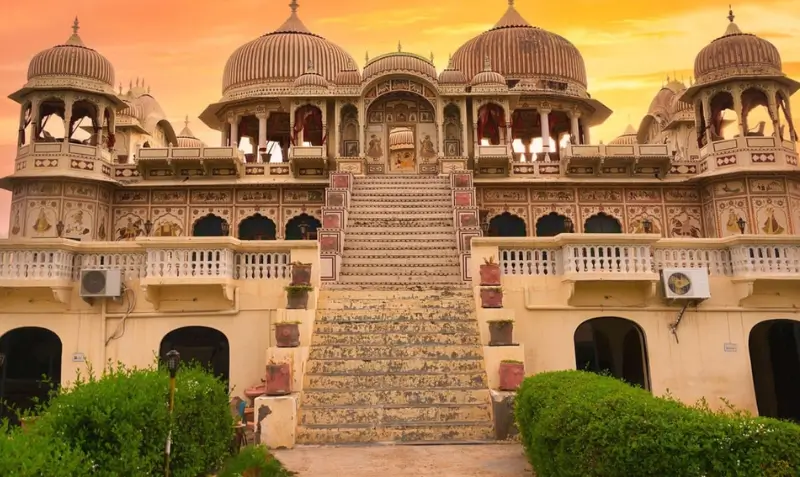
Hidden in the heart of Rajasthan's Shekhawati region, Mandawa is one of India's most remarkable heritage towns. Unlike the grand royal capitals of Jaipur, Udaipur, and Jodhpur, Mandawa attracts travelers with beautifully painted havelis, peaceful streets, historic architecture, and a fascinating merchant history that has earned it the nickname "The Open Air Art Gallery of Rajasthan."
Walking through Mandawa feels like stepping into a living museum. Almost every narrow street reveals another elaborately decorated mansion, where colorful frescoes cover walls, balconies, gateways, courtyards, and ceilings. These magnificent paintings illustrate scenes from mythology, royal life, local traditions, European influences, and everyday village activities, offering visitors an extraordinary insight into Rajasthan's artistic heritage.
The town flourished during the eighteenth and nineteenth centuries as wealthy merchant families built luxurious residences while trading across India and beyond. Rather than competing through size alone, many families commissioned skilled artists to decorate their homes with increasingly elaborate frescoes, transforming Mandawa into one of the finest collections of painted architecture anywhere in the world.
Today, travelers visit Mandawa not only to admire these masterpieces but also to experience a slower and more authentic side of Rajasthan. Unlike larger tourist destinations, Mandawa offers peaceful exploration without heavy crowds. Visitors can spend hours wandering through quiet lanes, photographing historic buildings, interacting with local artisans, and discovering architectural details that are often overlooked in busier cities.
Mandawa is also conveniently located for travelers beginning or ending a Rajasthan journey from Delhi or Jaipur. Many visitors include it within a broader itinerary covering the Shekhawati region before continuing toward Bikaner, Jodhpur, or other famous destinations across the state.
Whether you are passionate about architecture, photography, history, or traditional Indian art, Mandawa provides an unforgettable cultural experience that differs significantly from Rajasthan's better-known royal cities.
Explore Mandawa beyond conventional sightseeing and admire the extraordinary fresco paintings that transformed Shekhawati’s merchant mansions into one of Rajasthan’s most fascinating living art collections.
Chat On WhatsApp Contact UsThe greatest attraction in Mandawa is undoubtedly its extraordinary collection of painted havelis. These grand merchant mansions represent some of the finest surviving examples of fresco art in India and continue to attract historians, architects, photographers, and cultural travelers from around the world.
Unlike palaces constructed for royalty, these residences belonged to wealthy trading families whose commercial success enabled them to invest heavily in architectural beauty. Every haveli reflects not only financial prosperity but also artistic ambition. Skilled craftsmen covered walls with intricate paintings depicting religious stories, floral designs, hunting scenes, processions, British colonial influences, railway engines, automobiles, airplanes, and even early technological inventions introduced during the nineteenth century.
Among the most admired buildings is the Murmuria Haveli, renowned for its exceptionally detailed frescoes that combine traditional Indian themes with surprising European influences. Another architectural masterpiece is the Jhunjhunwala Haveli, where colorful paintings cover nearly every visible surface, creating one of the town's most impressive artistic displays.
Goenka Double Haveli is another landmark that demonstrates the remarkable craftsmanship of Shekhawati's painters. Elaborate arches, carved wooden doors, decorative balconies, and beautifully preserved murals illustrate the extraordinary attention to detail that defined Mandawa's prosperous merchant era.
Exploring these havelis on foot allows visitors to appreciate countless artistic details that cannot be fully understood through photographs alone. Every street reveals hidden courtyards, ornate gateways, decorative windows, and unexpected frescoes preserved behind historic facades. Local guides often share fascinating stories about the families who commissioned these remarkable buildings and explain the symbolism represented within many of the paintings.
Photography enthusiasts particularly enjoy Mandawa because changing sunlight throughout the day highlights different colors and textures across the frescoes. Early morning and late afternoon provide especially attractive lighting conditions for capturing architectural details without harsh shadows.
Unlike museums where artwork is displayed indoors, Mandawa's paintings remain integrated within the town itself. Simply walking through its streets becomes an artistic journey, where history, architecture, and local life continue to coexist in a uniquely authentic setting.
While the painted havelis are Mandawa's greatest attraction, the town offers several additional landmarks that deserve equal attention. At the center stands the impressive Mandawa Fort, originally constructed during the eighteenth century as a defensive stronghold before gradually evolving into a magnificent royal residence.
Today, much of the fort has been transformed into a heritage hotel while preserving its original architectural character. Visitors entering the complex discover beautifully painted walls, elegant courtyards, decorative arches, antique furniture, royal suites, and impressive viewpoints overlooking the town below. Even those not staying overnight often visit to admire the architecture and experience the atmosphere of Rajasthan's aristocratic past.
The fort's elevated position provides excellent panoramic views across Mandawa's historic streets, allowing travelers to appreciate the compact layout of the town and the remarkable concentration of painted buildings that surround it.
Beyond the fort, wandering without a fixed itinerary often becomes one of Mandawa's greatest pleasures. Every neighborhood contains hidden artistic treasures, small temples, traditional homes, handicraft workshops, and local markets selling textiles, paintings, pottery, leather products, jewelry, and handcrafted souvenirs.
Travelers interested in local culture may also visit nearby villages where traditional lifestyles continue much as they have for generations. These excursions provide opportunities to observe rural Rajasthan beyond the major tourist routes while interacting with local artisans whose craftsmanship continues to preserve the artistic traditions that made the Shekhawati region internationally famous.
For visitors beginning their Rajasthan journey from Delhi, Mandawa offers an ideal introduction to the state's architectural diversity before continuing toward larger cities such as Jaipur, Bikaner, Jodhpur, and Udaipur. Its peaceful atmosphere, remarkable heritage, and outstanding artistic legacy make it one of Rajasthan's most rewarding hidden gems.
Choosing the right season can greatly enhance your experience in Mandawa. The town is located in Rajasthan's Shekhawati region, where summers can become extremely warm. For comfortable sightseeing, pleasant walking conditions, and the best photography opportunities, the cooler months are generally considered the ideal time to visit.
Comfortable daytime temperatures allow visitors to spend several hours exploring the narrow streets without rushing between attractions. Since Mandawa is best discovered on foot, pleasant weather makes it much easier to admire the intricate frescoes, visit heritage buildings, and photograph architectural details at a relaxed pace.
Early mornings are especially rewarding. Soft natural light highlights the colors of centuries-old frescoes while the quiet streets provide an authentic atmosphere before daily activity begins. Late afternoons are equally attractive, as the warm sunlight enhances the textures of sandstone walls, carved balconies, and painted facades. Many photographers consider these hours the best time to capture Mandawa's remarkable artistic heritage.
Accommodation is another highlight of visiting the town. Several historic mansions and palaces have been carefully restored into heritage hotels, allowing guests to experience traditional Rajasthani architecture while enjoying modern comforts. Staying inside a restored haveli provides an experience that extends far beyond ordinary accommodation. Decorative courtyards, antique furniture, fresco-covered interiors, and traditional hospitality create a memorable connection with Mandawa's merchant history.
Among the most well-known heritage properties are Castle Mandawa, Hotel Mandawa Haveli, Vivaana Culture Hotel, and Sara Vilas, each offering a unique combination of history, architecture, and contemporary amenities. Many of these hotels organize cultural evenings featuring traditional music, folk performances, and authentic regional cuisine, providing guests with a deeper appreciation of Rajasthan's cultural traditions.
Photography enthusiasts should carry a wide-angle lens for capturing entire havelis as well as a zoom lens for documenting intricate frescoes and architectural details. Since many buildings remain privately owned, requesting permission before entering courtyards or photographing interiors demonstrates respect for local residents and helps preserve positive relationships between visitors and the community.
Walk through Mandawa’s historic lanes and discover magnificent havelis covered in intricate frescoes, where walls, courtyards, and doorways preserve stories of merchants, traditions, mythology.
Chat On WhatsApp Contact UsAlthough Mandawa is primarily celebrated for its architecture, its culinary traditions also deserve attention. Local restaurants and heritage hotels serve authentic Rajasthani cuisine, allowing visitors to experience regional flavors prepared according to traditional recipes. Popular dishes include Dal Baati Churma, Gatte Ki Sabzi, Ker Sangri, Bajra Roti, and a variety of traditional Indian sweets. Many heritage hotels also prepare royal recipes inspired by the cuisine once enjoyed by merchant families and local nobility.
Shopping in Mandawa reflects the artistic traditions of the Shekhawati region. Small markets and family-owned shops sell handcrafted textiles, miniature paintings, wooden handicrafts, embroidered fabrics, pottery, leather goods, decorative home accessories, and locally produced souvenirs. Unlike larger commercial centers, shopping here often feels more personal, allowing visitors to speak directly with artisans and learn about traditional production techniques.
Mandawa is well connected by road and is commonly reached from Jaipur or Delhi. The drive from Jaipur passes through scenic countryside and traditional villages, while travelers arriving from Delhi frequently include Mandawa as the first destination in a Rajasthan itinerary before continuing toward Bikaner, Jodhpur, or Udaipur. Hiring a private vehicle with an experienced driver is one of the most comfortable ways to travel because it provides flexibility and allows stops at interesting locations along the route.
Travelers should wear comfortable walking shoes, as most sightseeing involves exploring the town on foot. Carrying drinking water, sunscreen, sunglasses, and a hat is advisable when spending extended periods outdoors. Since many historic streets are paved with uneven stone surfaces, comfortable footwear significantly improves the sightseeing experience.
Respect for Mandawa's heritage is equally important. Many painted havelis remain privately owned or continue to be occupied by local families. Visitors should avoid touching delicate frescoes, climbing onto fragile architectural features, or entering restricted areas without permission. Responsible tourism helps preserve these extraordinary artistic treasures for future generations.
Mandawa may not have the scale of Jaipur, Jodhpur, or Udaipur, but its artistic richness and peaceful atmosphere make it one of Rajasthan's most rewarding destinations. For travelers interested in architecture, photography, history, and authentic cultural experiences, this remarkable town offers a unique opportunity to discover a lesser-known yet exceptionally beautiful side of Rajasthan.
Mandawa is famous for its beautifully painted havelis, historic frescoes, and rich merchant heritage, earning it the nickname "Open Air Art Gallery of Rajasthan."
One to two days is generally sufficient to explore the town's major havelis, Mandawa Fort, local markets, and heritage hotels at a comfortable pace.
Yes. Mandawa is one of Rajasthan's finest destinations for architecture, history, photography, and traditional fresco art, offering a quieter experience than many larger tourist cities.
Most visitors travel by road from Jaipur or Delhi, either by private vehicle or other available transportation options.
Yes. Several restored heritage hotels allow visitors to experience traditional Rajasthani architecture combined with modern comfort and hospitality.
Visitors should sample Dal Baati Churma, Gatte Ki Sabzi, Ker Sangri, Bajra Roti, and traditional Rajasthani sweets served in local restaurants and heritage hotels.
Absolutely. The town is regarded as one of India's finest destinations for architectural and heritage photography because of its colorful frescoes and beautifully preserved havelis.
Yes. Local guides offer walking tours that explain the history, architecture, symbolism, and artistic significance of Mandawa's famous painted buildings.
Popular purchases include handcrafted textiles, miniature paintings, pottery, leather goods, embroidered fabrics, wooden handicrafts, and locally made decorative items.
Yes. Mandawa is frequently included in Rajasthan itineraries connecting Delhi, Jaipur, Bikaner, Jodhpur, and Udaipur, making it an excellent cultural stop in the Shekhawati region.