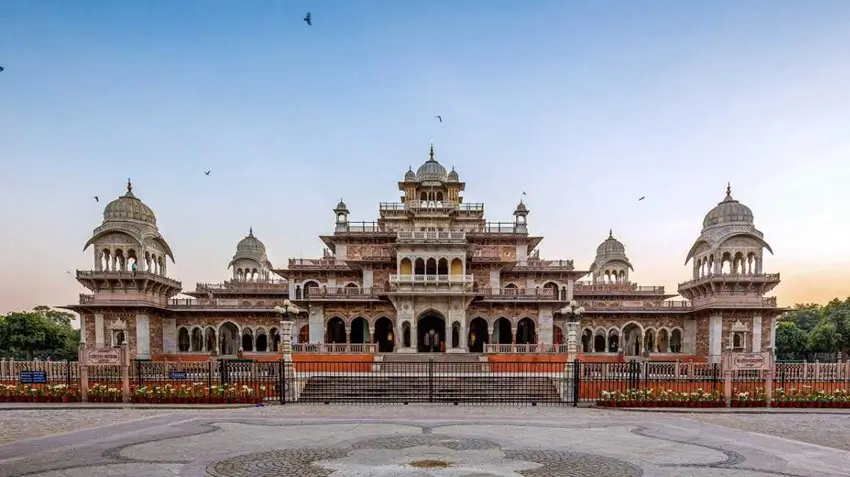
When comparing Jaipur vs Delhi heritage, the discussion extends far beyond counting monuments. Both cities represent powerful historical narratives, yet their heritage identities differ dramatically in origin, architectural language and urban experience. Jaipur reflects structured Rajput planning and royal aesthetics, while Delhi represents layered imperial transitions spanning centuries.
Delhi’s heritage is built upon successive empires — the Delhi Sultanate, Mughal dynasty and British colonial rule. Each era left monumental architecture that reshaped the city’s identity. From Humayun’s Tomb to Red Fort Delhi, the Mughal influence remains dominant. Later, British planners created Lutyens’ Delhi with grand boulevards and government buildings that define modern India’s political center.
Jaipur, by contrast, was founded as a planned city under Maharaja Sawai Jai Singh II. It is one of India’s earliest examples of scientific urban planning. Its grid layout, uniform pink façades and symmetrical market streets form a cohesive identity. The Jaipur heritage city experience feels architecturally consistent, unlike Delhi’s layered patchwork of historical zones.
Delhi represents historical succession. Jaipur represents deliberate design. Delhi feels like a living museum of empires. Jaipur feels like a preserved royal capital. Understanding this difference is essential before determining which city offers a stronger heritage experience.
The architectural contrast between the two cities defines the core of the Jaipur vs Delhi comparison. Delhi’s Mughal monuments are massive, symmetrical and built primarily with red sandstone and marble. Structures like Jama Masjid and Humayun’s Tomb reflect Persian influence blended with Indian craftsmanship.
The Delhi heritage monuments emphasize scale and imperial authority. Wide courtyards, domes, arches and intricate calligraphy dominate the landscape. These monuments were designed to symbolize political power and centralized empire.
Jaipur’s architectural language is distinct. Rajput architecture prioritizes elevated hilltop forts, lattice windows, painted frescoes and intricate mirror work. Amber Fort Jaipur showcases detailed courtyards and Sheesh Mahal interiors. The City Palace combines Mughal elements with Rajput aesthetics, yet retains regional identity.
Unlike Delhi’s monumental scale, Jaipur’s palaces feel intimate and decorative. The use of pink sandstone across the city creates a visual uniformity that enhances its heritage identity.
If one values imperial Mughal symmetry and monumental tomb architecture, Delhi holds strong appeal. If one prefers hilltop forts and intricately detailed palaces, Jaipur’s architectural heritage feels more immersive.
Delhi’s heritage is geographically scattered. Old Delhi preserves Mughal-era streets and bazaars. New Delhi reflects colonial planning. Mehrauli contains early Sultanate ruins. Exploring Delhi requires moving between distinct historical pockets.
In contrast, Jaipur old city heritage is concentrated within a defined walled area. Markets, temples, havelis and palaces coexist within walking distance. This cohesive layout allows visitors to experience heritage continuously rather than in fragmented segments.
Walking through Jaipur’s Johari Bazaar or Tripolia Bazaar feels immersive because the architecture remains consistent. In Delhi, moving from India Gate to Chandni Chowk shifts dramatically in character.
Delhi offers depth through variety. Jaipur offers depth through consistency. For travelers seeking seamless immersion, Jaipur often feels more concentrated and visually coherent.
Both cities offer unique experiences—from Jaipur’s royal heritage to Delhi’s vibrant culture and history. Let us help you choose the right destination or plan a combined trip that gives you the best of both.
Chat On WhatsApp Contact UsThe Red Fort Delhi represents Mughal political authority. Its red sandstone walls enclose palaces, audience halls and gardens that once housed emperors. It is historically significant as a symbol of India’s independence.
However, Amber Fort in Jaipur provides a more interactive fort experience. Its hilltop location, courtyard sequence and mirror-inlaid halls allow visitors to explore layered architectural spaces.
Delhi’s Red Fort is powerful historically but less visually dramatic compared to Rajasthan’s hilltop fort architecture. Jaipur’s fort complexes combine defense strategy with aesthetic flourish.
For travelers passionate about fort exploration, Jaipur’s forts often feel more experiential.
Delhi is India’s modern capital. Its heritage coexists with political administration, diplomatic missions and contemporary urban life. While monuments are preserved, the city’s identity extends beyond its historic structures.
Jaipur retains a stronger sense of living royal heritage. Traditional crafts, gemstone markets and festival celebrations remain integrated within daily life. The city’s architectural uniformity strengthens its heritage narrative.
The Jaipur cultural heritage experience often feels less diluted by modern urban sprawl compared to Delhi’s expansive metropolitan development.
Travelers uncertain whether to prioritize Jaipur or Delhi for heritage-focused exploration can seek expert guidance from Royal Rajasthan Travels. For structured heritage itineraries, private tours or curated city experiences, connect with Vikas Khabrani at +91-9414046260 or email info.royalrajasthan@gmail.com. Professional planning ensures balanced exposure to both cities’ architectural depth.
Jaipur offers concentrated Rajput heritage, while Delhi reflects multiple empires.
Yes, Delhi has a broader historical timeline and larger monument count.
Jaipur offers more dramatic hilltop fort experiences.
Yes, the old city layout is more compact and walkable.
Delhi showcases the finest Mughal monuments.
Yes, Jaipur’s pink architecture creates visual uniformity.
Yes, both have UNESCO recognized heritage sites.
Jaipur offers vibrant architectural color; Delhi offers monumental scale.
Yes, it spans multiple dynasties and colonial history.
Yes, both cities complement each other within a broader itinerary.