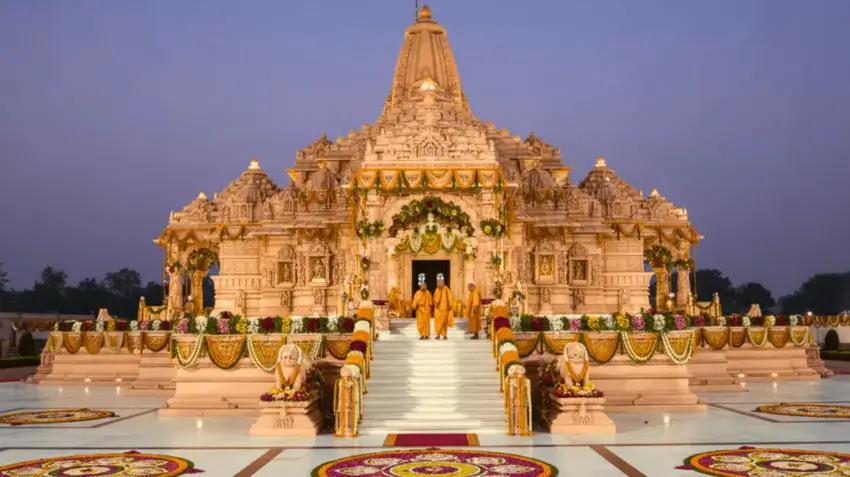
The opening of Ram Mandir Ayodhya has transformed the spiritual landscape of India. For millions of devotees across the world - especially NRIs in the United States, Canada, the UK, Australia, and the Middle East - visiting Ayodhya Ram Mandir is no longer a distant wish but an emotional priority.
However, one major question continues to dominate search queries:
How can international visitors secure VIP Darshan at Ram Mandir without facing long waiting lines, confusion, or last-minute restrictions?
This guide provides a detailed explanation of official procedures, special entry categories, practical booking strategies, on-ground protocols, and travel coordination tips specifically for international devotees planning a structured and comfortable visit.
The Ram Mandir entry system in Ayodhya has evolved as the temple receives a very large number of devotees. Travelers should therefore check the latest arrangement before planning their visit instead of relying on older references to VIP or special-entry categories.
As of 2026, the Shri Ram Janmabhoomi Teerth Kshetra Trust has introduced Sugam Darshan and General Darshan passes as part of its updated visitor-management system. The Trust has also removed the earlier Vishisht Darshan option from its online system.
| Darshan Option | Main Purpose | Planning Consideration |
| General Darshan | Standard Temple Visit | Follow the Current Entry System |
| Sugam Darshan | More Structured/Special Pass-Based Visit | Availability Depends on the Current Trust System |
| Aarti Pass | Participation in Specified Aarti | Separate Pass and Limited Availability |
| Unofficial VIP Service | Claimed Priority Access by Agents | Avoid Unless Independently Verified |
The important point for international travelers is that no private or unrestricted access to Ram Lalla should be assumed simply because a service is marketed as “VIP Darshan.” Temple entry remains subject to the Trust's current rules, security procedures and crowd-management arrangements.
Always verify the latest availability, terminology and booking procedure through the official Shri Ram Janmabhoomi Teerth Kshetra channels before making payment to any third party.
Before discussing booking procedures, it is important to clarify what VIP Darshan Ayodhya actually means.
Unlike private temple experiences in smaller pilgrimage towns, Ram Mandir VIP Darshan does not imply personal access to the sanctum. Instead, it generally refers to:
The Shri Ram Janmabhoomi Teerth Kshetra Trust regulates temple entry through structured digital systems and on-site management. There is no unofficial shortcut that guarantees access. Any claim suggesting “guaranteed private darshan” should be treated cautiously.
One of the biggest sources of confusion for travelers is the use of the term VIP Darshan. Many travel websites and agents continue to use this phrase because it is a popular search term. However, travelers should distinguish this marketing terminology from the official terminology currently used by the temple administration.
In April 2026, the Shri Ram Janmabhoomi Teerth Kshetra Trust introduced Sugam Darshan and General Darshan passes and removed the Vishisht Darshan option from its website.
Sugam Darshan is therefore a more relevant term to look for when researching current special or structured darshan arrangements.
The exact benefits, availability, reporting instructions and eligible visitors can change according to temple administration decisions. Travelers should not assume that a Sugam Darshan pass provides private access, unrestricted movement or a guaranteed amount of time in front of the deity.
For SEO purposes, travelers may still search for phrases such as “Ram Mandir VIP Darshan,” “VIP Darshan Ayodhya,” and “Ram Mandir VIP booking.” However, the actual booking decision should always be based on the current official Trust system rather than the wording used by a third-party website.
Discover the spiritual and cultural gems of Ayodhya beyond the famous Ram Mandir. With guided tours, comfortable accommodations, and hassle-free travel, we help you experience the city’s heritage in a meaningful and memorable way.
Chat On WhatsApp Contact UsTo secure Ram Mandir Darshan booking, international devotees must:
International visitors should book at least 2–3 weeks in advance during normal seasons and 4–6 weeks ahead during peak festivals.
Important festivals that affect availability include:
During peak days, general entry lines can exceed 5–6 hours. This makes early VIP Darshan Ram Mandir booking essential.
The current booking process should be checked through the official Shri Ram Janmabhoomi Teerth Kshetra booking system because availability, pass categories and release schedules can change.
A practical booking workflow is:
Step 1: Open the Official Booking Portal
Start from the official Shri Ram Janmabhoomi Teerth Kshetra website and follow the current booking link for darshan or related passes.
Avoid clicking on sponsored advertisements, social-media links or websites claiming to provide guaranteed VIP access.
Step 2: Register or Log In
If registration is required, enter the requested mobile number and complete the verification process. Use a phone number that you can access while travelling.
Step 3: Select the Available Darshan Category
If Sugam Darshan is available for your preferred date, select it according to the current instructions displayed on the official portal.
Do not assume that the same category or terminology will remain unchanged throughout the year.
Step 4: Select Date and Available Slot
Choose the travel date and available time slot. Festival dates and weekends can have significantly higher demand, so flexibility can make planning easier.
Step 5: Enter Devotee Details Carefully
Enter each visitor's details exactly as requested. International travelers should keep passport and visa/OCI-related documents available if the booking system requests identification details.
Step 6: Confirm the Booking
Review the names, date, number of devotees and other information before confirming the request.
Step 7: Save the Confirmation
Save the digital confirmation/pass on your phone and, where practical, carry a printed copy as a backup.
Step 8: Follow the Reporting Instructions
Read the reporting time and entry instructions shown on the confirmation. Reaching late can create problems even when a valid pass has been issued.
Important: Booking availability and procedures can change. Always treat the instructions displayed on the official Trust portal at the time of booking as the final authority.
Foreign passport holders must carry:
NRIs traveling with elderly parents should also carry:
Temple authorities may request verification before granting priority darshan access.
International devotees should prepare their travel and identification documents before arriving in Ayodhya. The exact documents required for temple entry can depend on the booking category and current verification rules.
It is sensible to keep the following available:
The name and identification details used for a booking should match the traveler's documents wherever the booking system requires identity verification.
For families travelling together, keep each person's documents separately organized. This can make verification easier at airports, hotels and temple-related entry points.
Temple authorities may update documentation requirements, so international travelers should check the latest instructions before departure rather than relying solely on information published in older travel guides.
The temple operates multiple daily darshan windows. Early morning slots between 6:30 AM and 8:30 AM are considered spiritually significant and less crowded.
Afternoon hours typically experience lower footfall compared to weekends and evenings.
For international travelers adjusting to time zones, mid-morning slots between 9:00 AM and 11:00 AM are often most practical.
Strategic slot selection reduces dependency on extreme “VIP arrangements” and increases the likelihood of smooth entry.
These three terms should not be treated as interchangeable.
General Darshan
General Darshan refers to the standard visitor arrangement. The current system and entry process can change according to crowd management and temple administration.
Sugam Darshan
Sugam Darshan is a structured pass introduced by the Shri Ram Janmabhoomi Teerth Kshetra Trust in 2026. According to reporting on the new system, the pass allows devotees to visit Ram Lalla, Ram Parivar and six temples located within the Parkota. The Trust also revised the number of devotees allowed on one pass to a maximum of five.
Aarti Pass
Aarti participation is separate from ordinary darshan. Aarti passes have their own availability and reporting requirements and should not be confused with a general darshan pass.
For travelers who specifically want to attend an aarti, check the current Trust portal for the relevant date, pass availability and reporting instructions.
Key takeaway: A traveler should decide whether the priority is ordinary darshan, Sugam Darshan or participation in a specific aarti before planning the rest of the Ayodhya itinerary.
Visitors should arrive at least 60–90 minutes before their confirmed darshan slot.
Security protocols include:
Professional pilgrimage planners often coordinate temple visits with:
This structured coordination improves the overall Ram Mandir Ayodhya experience.
Booking a pass does not remove the normal security and entry procedures at the temple. All visitors remain subject to security screening and the instructions of temple authorities.
A typical visit may involve:
Visitors should avoid carrying unnecessary belongings because temple security restrictions can make large bags, electronic devices and other prohibited items inconvenient.
The exact entry route, security arrangements and facilities may change depending on crowd levels, festivals and administrative decisions. Follow the instructions displayed at the temple rather than relying on an old map or previously published route.
Many NRIs travel with elderly parents. The temple provides limited wheelchair facilities and separate senior queues when crowd conditions permit.
For VIP Darshan for senior citizens, consider:
Mobility planning is essential. Ayodhya’s infrastructure is improving, but festival days still create heavy pedestrian congestion.
Families travelling to Ayodhya should plan the temple visit differently from solo travelers. Walking distances, waiting conditions, weather and security procedures can become more challenging for elderly visitors and young children.
For a smoother family visit:
Do not assume that a separate priority arrangement will always be available. Facilities and queues can depend on current temple administration and crowd conditions.
Families should therefore build some flexibility into their schedule instead of booking airport transfers or long-distance travel immediately after the expected darshan completion time.
General darshan can take 3–5 hours during high season.
With confirmed priority slot and efficient coordination, VIP Darshan Ayodhya can be completed within 60–120 minutes including security checks.
Actual sanctum viewing time is brief - usually 15–30 seconds - due to crowd management protocols.
Travelers should distinguish between darshan time and the total temple-visit time.
Even when a visitor has a confirmed pass or slot, additional time may be required for:
For this reason, international travelers should avoid scheduling another major activity immediately after darshan.
A practical itinerary should include a buffer of at least a few hours around the temple visit, particularly during weekends, festivals and other high-footfall periods.
The actual time spent viewing Ram Lalla is naturally brief because the temple manages a large number of devotees. The value of the experience therefore comes from careful planning rather than trying to maximize the amount of time inside the temple.
The popularity of Ram Mandir has created a large number of websites and travel-service advertisements using phrases such as “guaranteed VIP Darshan,” “instant VIP entry” and “100% confirmed priority darshan.”
Travelers should be careful before making any payment.
Warning signs include:
The temple Trust has its own official systems and procedures. Travelers should verify the current process through the Trust before paying any third party.
A travel company can assist with transportation, hotels, local coordination and itinerary planning, but that should not be presented as the same thing as an officially issued temple pass.
Many visitors combine Ram Mandir VIP Darshan with nearby spiritual circuits such as:
Luxury hotel options in Ayodhya are expanding, but availability remains limited during peak seasons. Advance reservations are critical.
Planning to visit Ayodhya Ram Mandir? Get hassle-free VIP Darshan booking, guided assistance, and complete travel support. Avoid long queues and enjoy a smooth spiritual experience with our expert services.
Chat On WhatsApp Contact UsA Ram Mandir visit can easily become the central part of a wider Ayodhya pilgrimage. Travelers with additional time can combine the temple visit with several important spiritual and cultural attractions.
Hanuman Garhi
Hanuman Garhi is one of Ayodhya's best-known religious sites and can be included before or after Ram Mandir depending on the day's route and crowd conditions.
Kanak Bhawan
Known for its religious significance and distinctive architecture, Kanak Bhawan is another important temple to include in an Ayodhya itinerary.
Saryu River Ghats
The ghats along the Saryu provide a peaceful contrast to the busy temple areas. An evening visit can be particularly suitable for travelers interested in the spiritual atmosphere of Ayodhya.
Ram Ki Paidi
Ram Ki Paidi is a prominent riverside area and can be combined with a Saryu-focused evening itinerary.
Suggested Half-Day Combination
Ram Mandir → Hanuman Garhi → Kanak Bhawan → Saryu Ghats → Hotel
Travelers should keep the schedule flexible because crowd conditions, security arrangements and temple timings can affect the actual sequence.
International visitors typically arrive via:
Private air-conditioned vehicles are strongly recommended, especially for multi-generational groups.
For international visitors and families, transportation planning is an important part of the darshan experience. A temple booking does not automatically solve the problem of getting to the correct entry point at the right time.
A practical plan should include:
Hotel → Temple reporting point → Darshan → Local sightseeing → Hotel
For travelers arriving by air, the transfer from the airport should be planned with additional time for baggage collection and local traffic. Those arriving by train should similarly allow enough time between railway-station arrival and the temple reporting schedule.
A private vehicle can be useful for families and groups because it allows flexible hotel transfers and sightseeing without depending on multiple local connections.
However, vehicles may not be permitted up to the temple entrance. Travelers should expect to walk or use the designated local access arrangements according to current security restrictions.
Devotees should wear modest attire:
Security personnel strictly enforce compliance.
Temple security restrictions can change, so visitors should always check the latest instructions before travelling. As a general planning principle, carry as little as possible.
Avoid bringing unnecessary:
Use designated storage or cloakroom facilities where available rather than carrying restricted belongings through the security area.
For international travelers, a small document pouch containing essential identification and booking information is generally more practical than carrying a large day bag.
Ideal months for Ram Mandir Ayodhya Darshan:
Avoid Ram Navami week if seeking shorter queues.
The best time for darshan depends on the season, day of the week and current crowd levels.
Early morning can be attractive for devotees who want a quieter start to the day, while later slots may be more convenient for travelers arriving in Ayodhya after a flight or train journey.
Instead of assuming that one time is always the least crowded, check the latest availability and temple instructions for your travel date.
For International Travelers
A mid-morning or afternoon visit may be easier to coordinate with hotel check-in, airport transfers and local sightseeing.
For Families
Avoid building a schedule that requires elderly travelers or children to move quickly between multiple locations.
During Festivals
Allow substantially more time than on ordinary days. Ram Navami, Diwali and other major religious occasions can produce exceptional demand and changes to normal entry arrangements.
The most important factor is not simply choosing an “early” or “late” slot, but matching the darshan timing with your complete Ayodhya itinerary.
For overseas travelers, time is limited. Many combine darshan with 5–7 day India visits.
This structured approach eliminates uncertainty.
Through the official temple portal with passport verification and confirmed time slots.
No automatic guarantee; booking confirmation and eligibility determine priority access.
Passport, visa/OCI card, and booking confirmation.
At least 3–4 weeks before travel during normal season.
Limited assistance is available but should be pre-coordinated.
No, electronic devices are restricted within the inner complex.
Official darshan registration is generally free; premium arrangements involve logistical services only.
Yes, but all members must be registered.
Early morning or weekday mid-morning slots.
Photography inside the sanctum is prohibited.
Yes, many devotees plan a 4–5 day spiritual circuit.
Yes, modest attire is required.
Sanctum viewing is brief, usually under one minute.
Festival days follow stricter crowd control; early booking is critical.