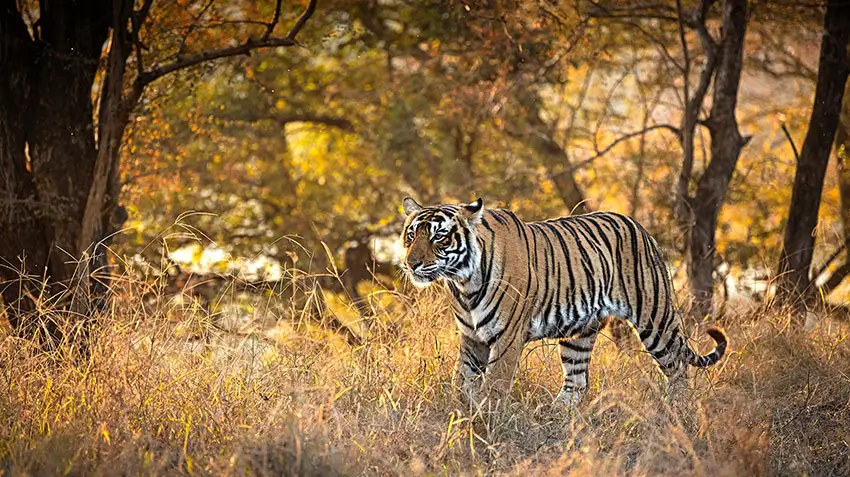
Rajasthan is widely associated with royal palaces, ancient forts, and sweeping desert landscapes. For wildlife travelers, the name Rajasthan often brings to mind the famous Ranthambore National Park and the thrilling chance of spotting a Bengal tiger. Yet focusing only on tigers means overlooking an extraordinary range of desert wildlife that thrives across the state’s diverse ecosystems.
The vast stretches of the Thar Desert, rocky hills of Jawai, grasslands of Tal Chhapar, and the protected landscape of the Desert National Park support a fascinating community of animals that have adapted to heat, scarce water, and dramatic seasonal changes. Travelers exploring Rajasthan with patience and curiosity often discover that the desert is far from empty. It is alive with movement, survival strategies, and unique species rarely seen elsewhere in India.
Understanding the desert wildlife of Rajasthan adds an entirely new dimension to a journey through the region. Wildlife sightings here are not only about predators and prey but also about learning how animals survive in one of the most challenging environments on the Indian subcontinent.
The Thar Desert ecosystem stretches across western Rajasthan and continues into Pakistan. Unlike the image of endless sand dunes, the landscape is far more varied. Rolling dunes, scrub forests, rocky outcrops, salt flats, and seasonal grasslands create multiple habitats that support wildlife.
During cooler months the desert becomes surprisingly active. Temperatures moderate, vegetation grows after the monsoon, and animals emerge from hiding. Migratory birds arrive in large numbers, while mammals roam across wide territories in search of food.
This fragile ecosystem demonstrates remarkable resilience. Every species living here has evolved specific adaptations such as efficient water conservation, nocturnal behavior, and camouflage against sandy terrain.
Travelers who visit Rajasthan for wildlife soon realize that the desert landscape supports an entire network of life rather than a barren wilderness.
While tigers dominate headlines, the Indian leopard is one of the most important predators in Rajasthan’s desert ecosystem. Leopards are highly adaptable animals capable of living in forests, mountains, and even semi-arid landscapes.
In Rajasthan, one of the most remarkable places to observe them is the Jawai Leopard Conservation Area. The rocky granite hills of Jawai provide natural caves where leopards rest during the day before emerging at dusk to hunt.
Unlike dense jungle habitats, the open terrain around Jawai often allows surprisingly clear sightings. Leopards move gracefully across the rocky ridges, blending perfectly with the landscape.
The coexistence between leopards and local communities in this region is particularly unique. Villagers respect the animals, and incidents of conflict remain relatively rare compared to other parts of India.
For wildlife enthusiasts, a Jawai leopard safari provides an unforgettable glimpse into one of Rajasthan’s most captivating predators.
Explore diverse ecosystems—from sand dunes to rocky hills—home to leopards, foxes, and rare bird species.
Chat On WhatsApp Contact UsAnother fascinating resident of the Thar Desert is the Indian desert fox. Smaller than many fox species found in colder climates, this animal is perfectly adapted to the desert.
Large ears help regulate body temperature while also enhancing hearing, allowing the fox to detect insects and small animals beneath the sand. Its sandy coat provides excellent camouflage against the desert terrain.
The desert fox is mostly nocturnal, becoming active during the cooler hours of evening and early morning. Travelers exploring desert regions near Jaisalmer or Desert National Park occasionally spot these animals moving swiftly between shrubs and dunes.
Their diet is remarkably flexible, including insects, rodents, small reptiles, and seasonal fruits. Such adaptability allows the species to survive even in areas where food resources fluctuate dramatically.
One of the rarest animals found in Rajasthan is the caracal, a striking wild cat recognized by its long black ear tufts. Historically the caracal lived across large parts of India, but today sightings are extremely rare.
Rajasthan is believed to host some of the last remaining populations in the country. The animal prefers dry grasslands and semi-desert regions where it hunts birds and small mammals.
Caracals are incredibly agile hunters capable of leaping into the air to catch birds in flight. Because they are extremely shy and largely nocturnal, spotting one in the wild is a remarkable event.
Conservation efforts are increasingly focusing on protecting habitats where this species still survives, highlighting the ecological importance of Rajasthan’s desert landscape.
Among the most commonly seen mammals in the Thar Desert is the chinkara, also known as the Indian gazelle. These elegant antelopes move gracefully across open plains and sand dunes.
Chinkaras are highly adapted to desert conditions. They can survive long periods without drinking water by obtaining moisture from plants and dew. Their keen eyesight allows them to detect predators from a distance.
Travelers exploring regions around Jaisalmer, Bikaner, and Desert National Park often encounter chinkaras grazing in small groups. Their swift movements and delicate build make them one of the most beautiful animals in Rajasthan’s desert environment.
The presence of healthy chinkara populations also supports predators such as leopards and desert foxes.
Although not limited to desert habitats, the nilgai is frequently seen in parts of Rajasthan. Known as the blue bull due to the bluish-gray coloration of adult males, nilgai are the largest antelope species in India.
They prefer open woodlands and scrub forests where they feed on grasses and leaves. In agricultural areas they sometimes venture into farmland, creating occasional conflicts with farmers.
Despite their size, nilgai can move surprisingly fast and often disappear into dense vegetation when disturbed.
Their presence across Rajasthan reflects the ecological diversity of the region’s landscapes.
While mammals often receive the most attention, Rajasthan’s desert ecosystems are equally famous for birdlife. Birdwatchers consider the region one of the most rewarding destinations in India.
The Great Indian Bustard, one of the world’s rarest birds, once roamed widely across Rajasthan’s grasslands. Conservation programs are now working urgently to protect this critically endangered species.
Other remarkable birds include the sandgrouse, desert wheatear, laggar falcon, and short-toed snake eagle. During winter months migratory birds arrive from Central Asia and Europe, transforming desert wetlands into vibrant bird habitats.
Tal Chhapar Sanctuary in particular is renowned for its large populations of blackbuck antelope and impressive bird diversity.
The hot climate of Rajasthan provides ideal conditions for reptiles. Several species of snakes and lizards thrive in the desert terrain.
The spiny-tailed lizard, commonly seen basking near burrows in sandy areas, is an important part of the ecosystem. It feeds mainly on plants and helps maintain ecological balance.
Snakes such as the saw-scaled viper and sand boa are also present, although encounters are relatively rare. Many reptiles remain hidden beneath the sand during the hottest hours of the day.
Understanding these species reveals how the desert ecosystem supports life at every level.
Rajasthan’s desert is full of life, not empty—spot fascinating animals that thrive in extreme environments.
Chat On WhatsApp Contact UsOne of the best places to experience desert wildlife in Rajasthan is Desert National Park near Jaisalmer. This protected area covers a vast region of dunes, grasslands, and rocky terrain.
The park supports chinkaras, desert foxes, reptiles, and a wide variety of bird species. Its remote setting offers travelers an authentic glimpse into the fragile beauty of the Thar ecosystem.
Safaris here are very different from jungle safaris in tiger reserves. The emphasis is on scanning open landscapes, watching birds in flight, and observing subtle signs of animal movement across the sand.
For many travelers, this quiet wilderness becomes one of the most memorable parts of a Rajasthan journey.
Travelers interested in Rajasthan wildlife tours often combine desert exploration with visits to famous national parks such as Ranthambore or Jawai. Each region offers a different perspective on the natural world.
Experienced guides play a crucial role in helping visitors understand animal behavior, track wildlife, and interpret the landscape.
For those planning a wildlife-focused journey across Rajasthan, personalized travel planning can make a significant difference.
Royal Rajasthan Travels specializes in private travel experiences that combine heritage destinations with authentic wildlife encounters.
Vikas Khabrani
+91-9414046260
info.royalrajasthan@gmail.com
Yes, the park’s open landscapes and bird diversity make it ideal for wildlife and landscape photography.
Yes, leopards are found in regions like Jawai where rocky hills provide natural shelter.
Yes, many travelers combine wildlife safaris, heritage cities, and desert experiences in a single itinerary.
Cooler months after the monsoon usually offer better wildlife activity and comfortable travel conditions.
Yes, wildlife safaris are conducted by trained guides and follow established conservation regulations.
Rajasthan offers excellent birdwatching opportunities with species such as bustards, falcons, sandgrouse, and migratory birds.
Yes, species such as chinkara and blackbuck are commonly seen in grassland and semi-desert habitats.
Desert National Park near Jaisalmer is one of the best places to observe desert wildlife and rare bird species.
Yes, Jawai is known for consistent leopard sightings due to its open rocky landscape and conservation efforts.
Rajasthan hosts leopards, desert foxes, chinkara antelope, nilgai, caracals, reptiles, and numerous desert bird species.