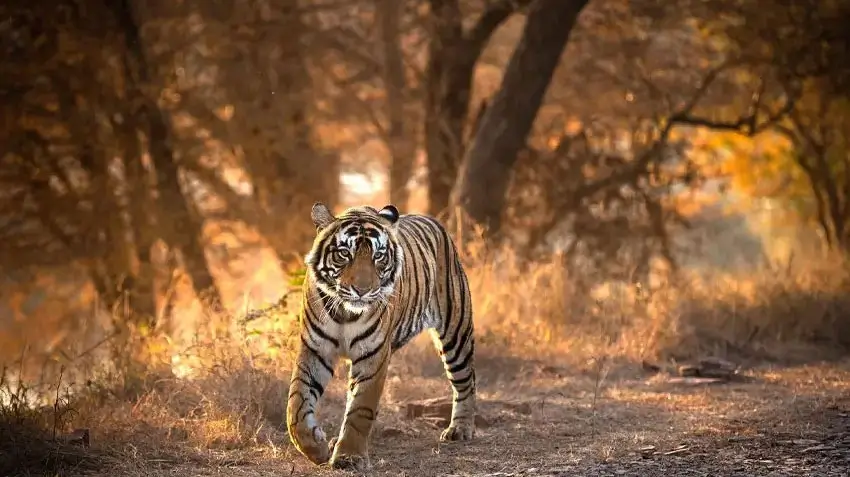
The question most travelers ask before booking a wildlife trip to Rajasthan is simple and direct: can you actually see tigers in Ranthambore? The answer is yes, but with important context. A Ranthambore tiger safari offers one of the best opportunities in India to see wild Bengal tigers in their natural habitat. However, wildlife sightings are never guaranteed, and understanding realistic expectations is crucial for a satisfying experience.
Ranthambore is not a zoo. It is a protected national park where animals move freely across large territories. Tigers are territorial predators with vast ranges. Sightings depend on timing, zone allocation, safari duration, and a bit of natural luck. Unlike staged wildlife experiences, Ranthambore provides authentic jungle encounters.
This guide explains how tiger sightings work, what influences visibility, how safari zones operate, and how to plan your visit strategically. Setting correct expectations ensures that your Ranthambore safari tour becomes an immersive wildlife journey rather than a pressured checklist moment.
Ranthambore National Park is considered one of India’s strongest tiger habitats. The park has a healthy tiger population, and many individuals are well-documented by forest authorities and wildlife photographers. Certain tigers have gained global recognition due to their frequent visibility in specific zones.
However, tiger movement is dynamic. Tigers follow prey availability, water sources, and territorial patterns. Some days they are active near popular safari routes; other days they remain deep within forest cover. Even experienced trackers cannot guarantee sightings on every drive.
The open forest terrain of Ranthambore improves visibility compared to dense jungles in other reserves. Ancient ruins, lakes, and open grasslands create sightlines that enhance the chances of spotting tigers crossing pathways or resting near water bodies.
Most successful sightings occur during early morning or late afternoon drives when temperatures are moderate and wildlife is more active. Midday heat often reduces predator movement.
Understanding that wildlife observation involves patience and unpredictability helps create a positive safari mindset.
Ranthambore is famous for its incredible tiger sightings and beautiful jungle landscapes. Let our team arrange your safari permits, jeep safari, and comfortable travel so you can enjoy a smooth and memorable wildlife adventure.
One of the most misunderstood aspects of a Ranthambore tiger safari is the zone allocation system. The park is divided into multiple safari zones. Each zone has its own landscape features, water sources, and tiger territories.
When booking a safari, travelers are assigned a specific zone. Zone allocation is managed by forest authorities through an online permit system. Visitors cannot freely move between zones during a single safari.
Some zones have historically produced more frequent tiger sightings due to resident tiger territories. However, tiger movement changes over time, and sightings can occur in any zone.
Because zone assignment is randomized based on availability, planning multiple safari drives increases the probability of seeing a tiger. Many wildlife travelers book at least two to three safaris to improve chances.
Understanding the zone structure reduces unrealistic expectations and highlights the importance of strategic booking.
Timing plays a major role in the success of a Ranthambore wildlife safari. Seasonal variations affect animal movement and visibility patterns.
Cooler months offer pleasant weather and comfortable safari conditions. During this period, tigers move across broader territories and may be seen during morning drives. Vegetation density can sometimes limit visibility but temperatures are favorable.
Hotter months increase tiger dependency on water bodies. As natural water sources shrink, tigers frequently visit lakes and ponds. This can enhance sighting probability, although heat conditions may be intense for visitors.
Monsoon season may temporarily restrict park access, depending on forest management schedules. Checking seasonal safari operations before planning is essential.
Strategic timing improves experience quality but does not replace patience and realistic expectations.
Ranthambore offers two primary safari vehicle options: shared open canters and smaller open jeeps. Both vehicles operate within assigned zones and follow regulated routes.
Open jeeps carry fewer passengers and offer more flexibility in positioning during sightings. Canters carry larger groups and may feel less intimate but still provide excellent viewing opportunities.
A typical safari lasts approximately three to four hours. During this time, drivers and guides track pugmarks, alarm calls from deer or langur monkeys, and fresh movement signs to locate tigers.
A Ranthambore tiger safari tour is not solely about spotting a tiger. The experience includes observing crocodiles, sambar deer, peacocks, sloth bears, and ancient fort ruins scattered across the park landscape.
The atmosphere of the forest at dawn or sunset contributes to the overall immersion beyond the single objective of tiger viewing.
Ranthambore National Park is one of the best places in India to see Bengal tigers in the wild. Book your safari with experienced guides, comfortable jeep or canter options, and expert planning to maximize your chances of an unforgettable tiger sighting.
Many travelers arrive with intense anticipation. Social media images of dramatic tiger encounters create unrealistic pressure. It is important to approach the safari as a wildlife observation experience rather than a guaranteed performance.
Even without a tiger sighting, Ranthambore offers stunning scenery, diverse wildlife, and historical ruins. The park’s landscape alone justifies the journey.
Booking multiple safaris improves probability. Remaining calm during drives enhances the overall enjoyment of subtle jungle moments such as bird calls, deer herds, and sunrise light filtering through trees.
Viewing a tiger in the wild is a privilege, not an entitlement. When it happens, it becomes unforgettable.
Ranthambore integrates easily into a broader Rajasthan private tour. Many travelers include it between Delhi and Jaipur within a Golden Triangle extension.
A structured route such as Delhi–Agra–Ranthambore–Jaipur creates a balanced mix of heritage and wildlife. Adding two nights in Ranthambore allows multiple safari attempts without rushing.
Traveling with a private driver in Rajasthan ensures smooth transfers between cities and park entry gates. Early morning departures and precise timing become easier to manage with private vehicle support.
Combining architecture and wildlife creates a more dynamic travel narrative.
For travelers whose primary objective is seeing a wild tiger, Ranthambore remains one of India’s most reliable destinations. While sightings cannot be promised, the park consistently produces tiger encounters throughout the year.
Its accessibility from major cities and open terrain enhance the overall experience. Compared to more remote reserves, Ranthambore offers structured infrastructure and comfortable accommodation options.
Ultimately, the value of a Ranthambore tiger safari lies not only in spotting a tiger but in experiencing India’s wildlife ecosystem authentically.
For structured planning of your Ranthambore tiger safari, zone booking assistance, safari coordination, and integration into your Rajasthan itinerary, you can directly connect with:
Vikas Khabrani
Owner – Royal Rajasthan Travels
Call / WhatsApp: +91-9414046260
Email: info.royalrajasthan@gmail.com
Professional coordination increases your safari opportunities and ensures seamless travel planning.
Yes, sightings are common but never guaranteed.
Two to three safaris increase your chances.
Tiger movement varies; sightings can occur in multiple zones.
Early morning and late afternoon drives are most productive.
Yes, it offers structured access and reliable infrastructure.
Approximately three to four hours.
Yes, but minimum age rules may apply.
It is popular but well-managed with zone distribution.
Yes, it fits easily into Rajasthan itineraries.
Vikas Khabrani at Royal Rajasthan Travels can coordinate your visit.