For many NRIs, visiting India is no longer a long annual trip. It is a carefully scheduled journey squeezed between professional commitments, school calendars, and international travel logistics. Within
limited time, families want depth, meaning, and emotional fulfillment rather than scattered sightseeing. Combining Ayodhya and Varanasi in 5 days offers precisely that balance.
Ayodhya represents devotion, origin, and divine narrative. It is the birthplace of Lord Ram and the emotional epicenter of the Ramayana tradition. Varanasi represents eternity, liberation, and continuity. It is one of the world’s oldest living cities and the spiritual heart of the Ganga.
Together, these cities create a pilgrimage arc that connects devotion with transcendence. For NRIs who cannot dedicate two weeks to temple circuits across India, this focused spiritual pairing offers clarity without overwhelming logistics.
The journey feels cohesive. Darshan at Ram Mandir Ayodhya establishes sacred grounding. Witnessing the Ganga Aarti in Varanasi deepens the spiritual resonance. Within five days, families experience two of Hinduism’s most powerful centers without rushing through lesser-known stops.
This structured pairing works especially well for multi-generational families seeking meaning rather than monument lists.
Arrival in Ayodhya should be treated as an emotional transition rather than a logistical checkpoint. Whether arriving via Lucknow or directly through Ayodhya’s airport, the journey into the city carries spiritual anticipation.
The first day is best structured gently. Instead of rushing immediately into temple queues, families benefit from settling into their accommodation, adjusting to climate, and absorbing the city’s devotional atmosphere.
Evening visits to Ram Ki Paidi along the Sarayu River allow quiet reflection before formal darshan. The sound of temple bells, devotional chants, and flickering lamps creates immersion without physical strain.
Time-poor NRIs often underestimate travel fatigue. A soft landing ensures that the following morning’s VIP Darshan at Ram Mandir feels centered rather than hurried.
This pacing transforms the visit from checklist completion into intentional spiritual arrival.
Experience the spiritual heart of India with our guided 5-day tour covering Ayodhya and Varanasi. From temple visits and cultural experiences to comfortable stays and seamless travel arrangements, we make your journey serene and memorable.
Chat On WhatsApp Contact UsThe second morning revolves around Ram Mandir Ayodhya darshan, which forms the emotional anchor of the entire five-day circuit. Structured entry planning is essential, particularly for NRI families traveling with elderly parents.
Arriving early allows smoother movement through security protocols. Temple authorities regulate flow carefully, and crowd patterns fluctuate depending on lunar calendar dates.
The darshan itself is brief, yet powerful. The sanctum’s presence carries devotional intensity that resonates deeply for diaspora families reconnecting with heritage.
After darshan, visits to Hanuman Garhi and Kanak Bhawan expand spiritual context without overwhelming schedules. These temples offer quieter spaces for reflection compared to the main complex.
The afternoon can remain flexible, allowing rest or short heritage walks. Maintaining energy levels is critical, as the next phase involves travel to Varanasi.
By dedicating focused time to Ayodhya rather than squeezing it into a rushed half-day visit, families anchor their pilgrimage meaningfully.
Travel between Ayodhya and Varanasi typically takes several hours by road, depending on traffic patterns. For time-sensitive NRIs, private air-conditioned transfers ensure comfort and flexibility.
The journey itself can become reflective time. Passing through Uttar Pradesh’s rural landscapes offers a glimpse into everyday India beyond temple towns.
Arriving in Varanasi by evening allows families to prepare for one of the most profound spiritual spectacles in the world — the Ganga Aarti.
Choosing centrally located accommodation near the ghats minimizes logistical stress. Walking distance to the river is particularly valuable, reducing dependency on traffic-congested routes.
Efficient transfer coordination ensures that travel does not consume spiritual focus.
Witnessing the Ganga Aarti Varanasi transforms the pilgrimage from individual devotion to collective spirituality. As priests perform synchronized rituals with lamps and conch shells, the riverbank becomes a living altar.
The ceremony reflects centuries of continuity. The Ganga is not merely a river; it is revered as a divine mother, purifier, and life force.
For NRIs who have grown up hearing stories of Kashi’s sanctity, experiencing the ritual firsthand creates emotional intensity that often surpasses expectation.
Viewing options vary. Some families prefer seated platforms for comfort. Others choose private boat vantage points on the river, offering panoramic perspectives of the illuminated ghats.
The ritual’s rhythm, sound, and visual grandeur anchor the Varanasi experience in devotion rather than tourism.
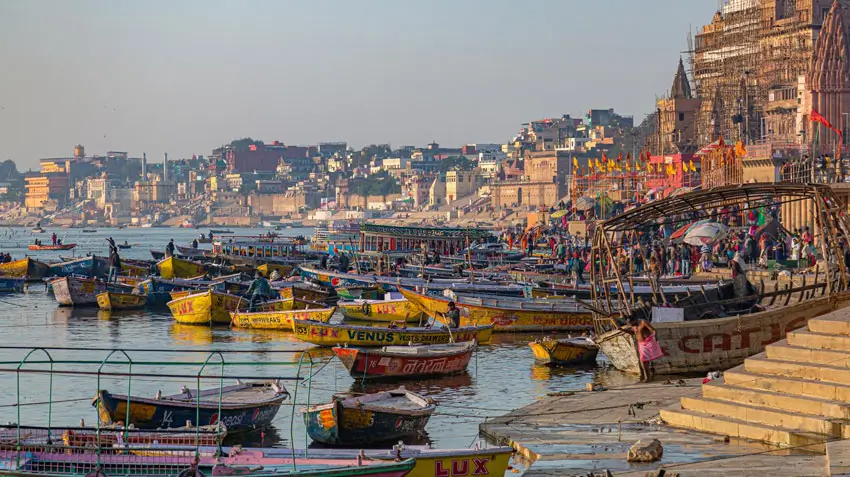
Varanasi’s ghats are layered with symbolism. Each ghat holds distinct historical and religious significance. Morning boat rides at sunrise reveal priests performing rituals, devotees offering prayers, and daily life unfolding along the river.
The contrast between cremation ghats and bathing ghats underscores Varanasi’s unique relationship with life and death. Rather than morbidity, the atmosphere carries acceptance and philosophical depth.
Walking through narrow lanes toward Kashi Vishwanath Temple introduces visitors to incense-filled corridors, ancient shrines, and centuries-old trade routes.
This immersion contextualizes the city beyond a single evening ritual. For time-poor NRIs, focused exploration of key ghats combined with temple visits provides sufficient depth without fatigue.
The experience becomes contemplative rather than overwhelming.
Modern NRI travelers often balance devotion with comfort expectations. Boutique heritage hotels and riverside properties in Varanasi offer refined stays without disconnecting from the city’s sacred atmosphere.
Elevator access, private transfers, and curated temple visits ensure senior-friendly travel. Dietary preferences, especially vegetarian requirements, are easily accommodated in both cities.
In Ayodhya, hotel infrastructure continues expanding. Selecting reputable properties close to temple zones reduces transit strain.
Luxury in this context does not diminish spirituality. It ensures that energy remains focused on devotion rather than logistical challenges.
Diaspora families often face scheduling limitations. A five-day Ayodhya and Varanasi spiritual circuit balances depth and practicality.
Two days in Ayodhya allow darshan and temple immersion. Two days in Varanasi allow ritual participation and cultural understanding. One day accommodates travel transitions.
The structure avoids rushed temple hopping across multiple cities. Instead, it concentrates emotional energy in two profound destinations.
Children experience narrative continuity between Ram’s birthplace and the eternal river. Elders find fulfillment without excessive walking or unpredictable transfers.
This compact circuit respects both devotion and time.
Explore the iconic cities of Ayodhya and Varanasi on a 5-day guided tour. Enjoy cultural experiences, historic landmarks, and comfortable stays, all planned for a smooth and memorable journey. Let us handle the details while you immerse yourself in India’s heritage.
Chat On WhatsApp Contact UsFor second-generation NRIs, pilgrimage serves as cultural education. Walking through Ayodhya contextualizes the Ramayana beyond storybooks. Observing Varanasi’s rituals demonstrates living tradition
rather than abstract philosophy.
Children witnessing cremation ceremonies on the Ganga often engage in meaningful discussions about mortality and spiritual beliefs. Such experiences provide grounding rarely found in Western educational systems.
The five-day structure ensures exposure without overload, allowing reflection rather than exhaustion.
Advance darshan registration prevents delays in Ayodhya. Pre-arranged private vehicles reduce transit uncertainty. Early morning temple visits minimize crowd intensity.
Varanasi’s narrow lanes demand careful navigation. Using knowledgeable local coordinators ensures temple access without confusion.
Seasonal timing influences comfort. Cooler months offer pleasant weather for walking along ghats.
Thoughtful planning transforms a potentially chaotic pilgrimage into a calm and fulfilling journey.
Yes, when structured efficiently with focused priorities.
Approximately several hours by road depending on traffic.
Priority arrangements are available through official channels.
Yes, with private transport and appropriate hotel selection.
Cooler months provide more comfortable walking conditions.
Yes, but reserved seating or boat views improve comfort.
Yes, though pacing should be adjusted.
Yes, both cities primarily serve vegetarian cuisine.
Allowed in most areas except restricted temple zones.
Yes, extensions to Prayagraj or Bodh Gaya are possible.