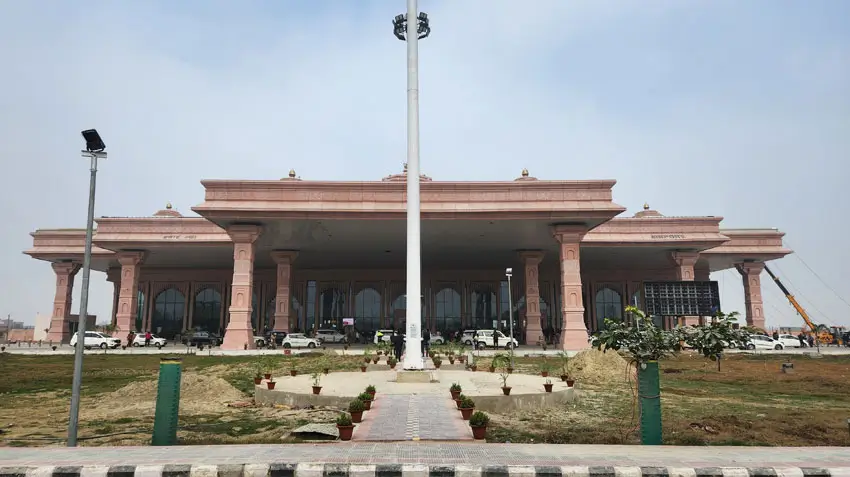
The opening of Maharishi Valmiki International Airport Ayodhya marks a defining shift in pilgrimage access to one of India’s most sacred cities. With the global attention surrounding Ram Mandir Ayodhya, the need for clear, accurate, and logistics-focused travel information has become critical—especially for NRIs and foreign nationals planning short spiritual visits.
Search trends show increasing demand for:
This guide explains airport connectivity, transfer systems, hotel location advantages, peak season management, and practical arrival strategy for 2026.
The development of Ayodhya International Airport was accelerated following the consecration of Ram Mandir. The airport is designed to handle significant pilgrimage traffic while maintaining regulated security protocols.
For international visitors, the airport reduces reliance on long road journeys from Lucknow or Varanasi. The shorter surface commute significantly improves comfort for elderly devotees and families traveling with children.
Although still expanding in capacity, the airport now functions as the primary entry point for structured pilgrimage planning.
Arriving at Ayodhya Airport? We provide complete travel assistance including airport pickup, hotel booking, and Ram Mandir VIP Darshan arrangements. Make your journey smooth, comfortable, and stress-free with our expert support.
Chat On WhatsApp Contact UsTravelers from the United States, Canada, the United Kingdom, and Australia typically land at Delhi IGI Airport or Mumbai International Airport, then connect domestically to Ayodhya.
Flight duration from Delhi to Ayodhya averages around one hour and fifteen minutes. Total travel time, including immigration and baggage transfer, generally ranges between four to six hours depending on layover coordination.
For Middle East–based NRIs, routing via Dubai or Doha often provides efficient one-stop connectivity.
The structure of Ayodhya airport connectivity 2026 reflects a hub-based model rather than point-to-point long-haul access.
One of the most searched queries is Ayodhya airport to Ram Mandir distance. Under regular conditions, the journey is short and straightforward. However, pilgrimage surges during Ram Navami, Diwali, and major Ekadashi days can significantly extend travel time.
Authorities frequently introduce traffic regulation zones around the temple complex. Private vehicles may be stopped at designated drop-off areas, requiring short walking distances.
Understanding seasonal congestion patterns is essential when planning VIP Darshan Ram Mandir alongside airport arrival.
Private air-conditioned vehicles remain the most reliable option for international visitors. They provide luggage assistance, flexible routing, and coordinated temple drop-off.
Prepaid taxi counters operate inside the arrival terminal, offering regulated pricing. However, vehicle availability can fluctuate during peak religious days.
App-based ride services are gradually expanding, though reliability during heavy pilgrimage influx remains inconsistent.
For organized spiritual tours, pre-booked group transfers allow synchronized temple visits and hotel check-ins.
Hotels closest to the temple provide walking proximity but may face parking and crowd density challenges. These are best suited for short overnight stays focused solely on darshan.
Mid-range distance properties offer better vehicle access and slightly calmer surroundings while maintaining reasonable temple reach.
Airport corridor hotels are emerging as a preferred choice for senior pilgrims. They provide quieter environments and smoother airport transfer coordination.
Although Ayodhya’s hospitality infrastructure is expanding, it does not yet offer extensive five-star inventory comparable to Delhi or Varanasi. Early reservations remain essential.
Many NRIs arrive in India after 14–18 hour journeys. Attempting immediate darshan without rest often results in exhaustion.
A structured arrival plan typically includes:
Arrival day hotel check-in → Rest period → Light evening visit (if desired) → Morning darshan the next day.
This approach improves overall spiritual experience and avoids physical strain.
Search demand for Ayodhya travel for elderly parents continues to increase. While infrastructure is improving, heavy pedestrian movement during festivals can pose mobility challenges.
Selecting hotels with confirmed elevator access and arranging private transport ensures smoother coordination. Early morning temple slots are generally more manageable for seniors.
During peak religious dates, airfare and accommodation costs can surge dramatically. Booking last-minute during these periods is risky.
For structured pilgrimage planning, advanced scheduling ensures availability of:
While Lucknow remains a major aviation hub, Ayodhya International Airport offers logistical efficiency for time-sensitive pilgrimages.
For devotees planning a one- or two-day Ayodhya visit before proceeding to Varanasi, the local airport significantly reduces road fatigue.
Just arrived at Ayodhya Airport? Let us handle everything for you—from airport pickup and hotel bookings to Ram Mandir VIP Darshan arrangements. Enjoy a smooth, hassle-free journey with our trusted travel services.
Chat On WhatsApp Contact UsOngoing infrastructure upgrades position Ayodhya as a long-term global pilgrimage center. Airport development is expected to scale further between 2026 and 2027.
Efficient airport planning determines whether a pilgrimage feels organized or chaotic.
Shorter transfers allow:
Well-planned logistics ensure that the focus remains on devotion rather than transportation stress.
It operates through hub connectivity with phased international expansion.
Approximately 10–12 kilometers.
20–25 minutes in normal traffic.
Ayodhya is more convenient for direct temple visits.
Prepaid counters operate inside the airport.
Yes, especially for families and elderly travelers.
Yes, several new properties are emerging in the corridor.
Limited charter operations are expanding.
October to March.
Yes, but pre-coordination is advised.
At least 6–8 weeks in advance.
Yes, significant crowd surges occur.
Yes, structured transfers make this practical.
Yes, phased development continues through 2027.