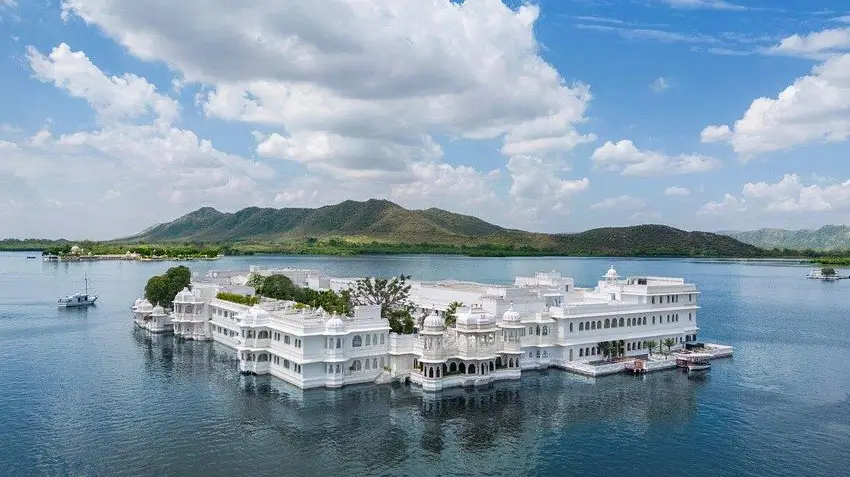
When travelers debate Udaipur vs Jaisalmer, they are not simply choosing between two cities. They are choosing between two completely different emotional landscapes within Rajasthan. One represents water, romance and marble palaces. The other represents sand dunes, desert silence and golden fort walls. Deciding where to spend more time depends on the type of experience you seek.
Udaipur travel experience revolves around lakes, reflections and palace courtyards. The city sits among the Aravalli hills and offers a softer visual palette compared to western Rajasthan. Lake Pichola, Fateh Sagar Lake and the grand City Palace create a serene environment where mornings begin with calm water views and evenings unfold through rooftop dining overlooking illuminated palace domes.
In contrast, the Jaisalmer desert experience is dramatic and raw. The Golden Fort rises from the Thar Desert like a mirage. Narrow sandstone lanes glow under the sun. The city feels like a frontier settlement shaped by trade caravans and desert survival. Sand dunes stretch endlessly beyond the urban area, creating a landscape defined by horizon and sky.
The emotional contrast between these cities is profound. Udaipur feels elegant and composed. Jaisalmer feels adventurous and historic. Udaipur invites relaxation. Jaisalmer invites exploration. Understanding these identities is the foundation of deciding where to allocate more time in your itinerary.
Confused between the romantic lakes of Udaipur and the golden desert charm of Jaisalmer? Let us help you choose the perfect destination or plan a trip that includes both for a complete Rajasthan experience.
Chat On WhatsApp Contact UsThe most visible difference between Udaipur and Jaisalmer tourism lies in geography. Udaipur’s natural setting includes lakes, surrounding hills and greenery during favorable seasons. The city’s elevation provides cooler evenings and scenic hill drives. The reflection of marble palaces on Lake Pichola creates some of the most iconic imagery in Rajasthan.
Spending multiple days in Udaipur allows travelers to enjoy boat rides, hilltop viewpoints such as Sajjangarh Monsoon Palace, and tranquil gardens like Saheliyon Ki Bari. The landscape supports slow travel. Cafés and terrace restaurants encourage extended evenings with soft breezes flowing from the water.
Jaisalmer, by contrast, is defined by the Thar Desert landscape. Vegetation is sparse. The terrain appears vast and open. The beauty lies in its minimalism. The Sam Sand Dunes outside the city provide sunset views that feel cinematic and dramatic. Nights in the desert camp introduce starlit skies free from urban light pollution.
If you are drawn toward water, hills and scenic leisure, Udaipur justifies a longer stay. If you prefer open desert horizons and the silence of sand dunes, Jaisalmer commands deeper exploration.
Architecturally, both cities offer rich heritage, but in different forms. The Udaipur City Palace complex is among the largest palace complexes in Rajasthan. Its marble balconies, intricate courtyards and museum collections narrate the story of the Mewar dynasty. The presence of Lake Palace and Jag Mandir floating on water enhances the city’s regal character.
Udaipur’s architecture blends Rajput and Mughal influences, yet retains its distinctive white marble aesthetic. The city’s old quarters feature narrow lanes, temples and artisan shops, but the overall environment feels relatively organized and less chaotic.
Jaisalmer’s architecture centers around its living Jaisalmer Fort, also known as Sonar Quila. Unlike most forts in India, this fort remains inhabited. Houses, temples and shops operate within its walls. This creates a unique immersive experience where heritage is part of daily life.
The city’s sandstone havelis such as Patwon Ki Haveli and Nathmal Ki Haveli showcase intricate carvings reflecting merchant prosperity. Walking through Jaisalmer feels like stepping into a medieval desert trading hub.
If architectural scale and palace refinement matter most, Udaipur might deserve extra days. If you prefer immersive fort exploration and sandstone craftsmanship, Jaisalmer may require more time.
The things to do in Udaipur focus on relaxation and scenic enjoyment. Boat rides across Lake Pichola provide slow-paced sightseeing. Evening cultural shows at Bagore Ki Haveli introduce folk dance in intimate settings. Hilltop viewpoints allow panoramic photography. Luxury hotels often include spa and heritage dining experiences.
Spending three nights in Udaipur allows unhurried mornings, leisurely lunches and extended rooftop evenings. It suits couples, honeymoon travelers and those seeking romantic ambience.
Jaisalmer offers more experiential diversity. The Jaisalmer desert safari is a defining highlight. Overnight desert camps introduce camel rides, traditional folk performances and open-sky dining. The adventure element of exploring dunes adds variety beyond monument visits.
Additionally, exploring Kuldhara village and Gadisar Lake enriches the city’s historical context. Desert landscapes also provide photography opportunities unmatched elsewhere in Rajasthan.
If you prefer structured relaxation and scenic elegance, Udaipur justifies longer stays. If you seek dynamic desert activities and immersive fort life, Jaisalmer may need more time allocation.
Whether you’re drawn to peaceful lakes, scenic views, and royal charm, or exciting desert landscapes and cultural experiences, Rajasthan offers it all. Let us help you plan the perfect trip based on your travel style.
Chat On WhatsApp Contact UsDetermining how long to stay in Udaipur vs Jaisalmer depends on itinerary structure. Udaipur comfortably fills three nights, allowing time for palace exploration, lake experiences and nearby excursions. Extending beyond three nights works well for travelers prioritizing leisure and luxury.
Jaisalmer typically requires two nights minimum — one for fort and haveli exploration and one for desert camp experience. However, travelers interested in slow exploration and photography may extend to three nights.
If your itinerary is limited, Udaipur may provide greater value in fewer days due to concentrated attractions. If desert immersion is central to your journey, Jaisalmer deserves additional time.
Travelers uncertain about allocating nights between these two destinations can seek tailored itinerary advice from Royal Rajasthan Travels. For customized Udaipur and Jaisalmer travel planning, hotel recommendations or desert camp arrangements, contact
Vikas Khabrani at +91-9414046260 or email info.royalrajasthan@gmail.com. Expert planning ensures balanced pacing aligned with your travel priorities.
Yes, Udaipur’s lake setting creates a romantic atmosphere.
Yes, desert safari adds adventure element.
Three days allow comfortable exploration.
Two to three nights including desert camp stay.
Both offer strong visuals in different landscapes.
Generally yes due to lake presence and elevation.
Udaipur has more palace hotel options.
Yes, especially within its living fort.
Yes, most Rajasthan itineraries include both.
Udaipur may be more comfortable for families.