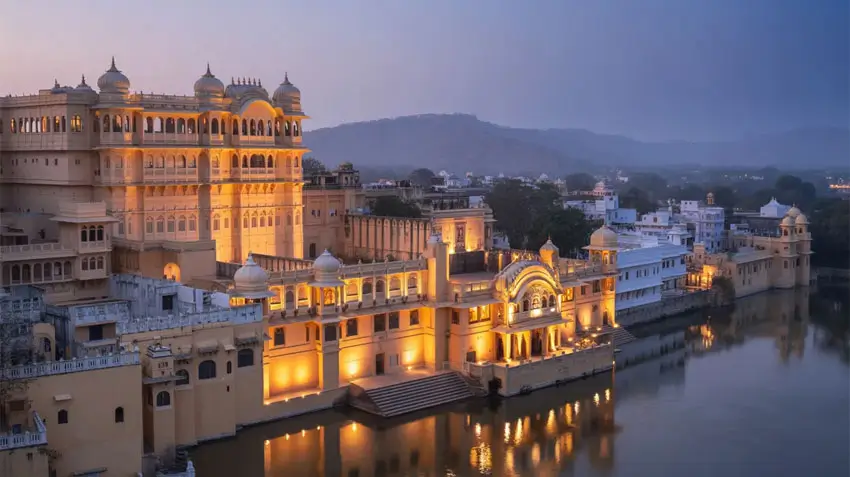
Rajasthan’s royal families are not relics of a vanished past. They are living institutions shaped by centuries of warfare, diplomacy, cultural patronage, and adaptation. Although their formal political authority ended after India’s independence and the integration of princely states, many royal families of Rajasthan continued to influence the region through heritage conservation, cultural preservation, philanthropy, and tourism.
Among these dynasties, the royal houses of Jodhpur, Udaipur, and Jaipur stand out for their scale, historical continuity, and influence on modern Rajasthan. Each represents a distinct political philosophy, architectural language, and approach to survival in a changing world.
Understanding these royal families requires moving beyond palace facades. It demands attention to lineage, territorial ambition, alliances, resistance, and reinvention.
The royal houses of Rajasthan are best understood as historic dynasties whose political authority changed fundamentally after Indian independence. Today, members of these families do not rule princely states in the constitutional sense. Their modern influence is more closely associated with heritage conservation, cultural institutions, philanthropy, hospitality, public events and the preservation of family traditions.
The three royal houses featured in this guide represent different historical traditions:
| Royal House | Historic Dynasty | Historic Capital | Famous Heritage Legacy | Modern Focus |
| Udaipur | Sisodia / House of Mewar | Udaipur | City Palace, Mewar Heritage | Heritage, Philanthropy and Cultural Preservation |
| Jodhpur | Rathore / House of Marwar | Jodhpur | Mehrangarh Fort | Museum, Conservation and Cultural Programming |
| Jaipur | Kachhwaha | Jaipur | City Palace, Amber Heritage | Museums, Heritage Experiences and Cultural Initiatives |
These families no longer exercise the sovereign powers associated with their historical kingdoms. The Constitution's 26th Amendment ended official recognition of former rulers and abolished privy purses in 1971. Their continuing importance today is therefore primarily cultural, historical and institutional rather than governmental.
For travelers, this distinction makes the experience more meaningful: a visit to a palace today is not simply a journey into a former monarchy, but an opportunity to understand how Rajasthan's royal heritage has been preserved and adapted for the modern era.
The royal families of Rajasthan belong largely to Rajput clans, warrior lineages bound by codes of honor, loyalty, and sovereignty. Their rule was not merely administrative. It was symbolic. Kingship represented divine sanction, martial capability, and custodianship of land and people.
Royal authority in Rajasthan developed through fort-building, marriage alliances, ritual patronage, and military resistance. Geography played a decisive role. Hill forts, desert strongholds, and lake-surrounded capitals were strategic responses to terrain and threat.
The royal families of Jodhpur, Udaipur, and Jaipur each emerged from different circumstances, shaping their identities in unique ways.
Explore the heritage, palaces, and timeless traditions of the royal families of Jodhpur, Udaipur, and Jaipur with personalized travel planning and comfortable private transport.
Chat On WhatsApp Contact UsThe end of princely rule did not erase Rajasthan's royal identities overnight. The political structure of the region changed through the integration of princely states into independent India, while royal families gradually shifted from formal political authority toward private, cultural and heritage roles.
The former rulers eventually lost their official constitutional recognition and privy purses through the Constitution (Twenty-Sixth Amendment) Act, 1971.
This transition created a new role for many royal families. Forts and palaces became museums, cultural institutions, hotels and heritage attractions. Family trusts and foundations increasingly became important vehicles for conservation, education, philanthropy and cultural programming.
This history explains why the words "Maharaja," "Maharana" or "royal family" continue to appear in Rajasthan tourism even though the region is governed through India's democratic constitutional system.
For modern travelers, Rajasthan's royalty is therefore best understood as a living cultural legacy rather than a continuing political monarchy.
The royal family of Udaipur traces its lineage to the Sisodia clan of Mewar, one of the most fiercely independent Rajput houses. Unlike many kingdoms that entered sustained alliances with external powers, Mewar’s rulers cultivated a reputation for resistance and autonomy.
Udaipur itself was founded as a strategic response to loss. When earlier capitals fell, the rulers of Mewar retreated into the Aravalli hills, establishing a new seat protected by lakes and rugged terrain. This geography allowed the dynasty to preserve sovereignty longer than many contemporaries.
The City Palace Udaipur stands as a physical chronicle of this endurance. Built incrementally over generations, it reflects adaptation rather than uniformity. Balconies, courtyards, and ceremonial halls reveal a dynasty evolving under pressure while preserving ritual authority.
Today, the Mewar royal family continues to play a visible role in heritage conservation and cultural patronage. Their involvement in maintaining palaces, museums, and ceremonial traditions ensures that Mewar’s identity remains active rather than archival.
The modern House of Mewar continues to maintain a visible cultural and institutional presence in Udaipur. Eternal Mewar currently identifies Shriji Dr. Lakshyaraj Singh Mewar as the 77th Custodian of the House of Mewar. His work is connected with heritage, philanthropy, education, hospitality and cultural initiatives.
This modern role is different from the political authority once exercised by the Maharanas of Mewar. Today, the emphasis is on stewardship of heritage and community institutions.
The Maharana of Mewar Charitable Foundation has been involved in education, conservation and cultural preservation, while the City Palace complex remains one of the principal places where visitors can experience the material heritage of Mewar.
The continuity of the House of Mewar is therefore visible not only through titles and ceremonies, but also through museums, charitable initiatives, cultural programs and the preservation of historic spaces.
The present royal household of Udaipur retains ceremonial prominence. Public rituals, festivals, and heritage initiatives continue under royal stewardship. Rather than withdrawing from public life, the family positions itself as cultural custodian.
This approach reinforces Udaipur’s image as a living royal city rather than a static heritage destination. Travelers encounter not just monuments, but continuity.
Travelers visiting Udaipur can experience the legacy of Mewar through the City Palace complex, museums, historic architecture, cultural programs and nearby heritage properties.
The City Palace should not be viewed simply as a single palace building. It represents centuries of additions and architectural development associated with the Mewar dynasty.
Travelers can also learn more about the family's modern heritage work through the institutions associated with the City Palace and the Maharana of Mewar Charitable Foundation.
The important distinction is that public visitor areas and private royal residences are not necessarily the same. Access depends on the specific museum, experience or event being offered at the time of the visit.
This makes Udaipur particularly interesting for travelers who want to combine palace architecture with an understanding of how royal heritage is maintained in the present day.
Jodhpur’s royal family belongs to the Rathore clan, whose dominance shaped the Marwar region. Unlike Mewar’s defensive posture, Marwar expanded through strategic aggression and desert mastery.
The city of Jodhpur was founded as a fortified capital controlling vital trade routes across the Thar Desert. Its skyline is defined by Mehrangarh Fort, one of India’s most formidable forts, rising directly from rock rather than surrounding hills.
Mehrangarh reflects Marwar’s martial philosophy. Massive walls, controlled access points, and commanding views signal authority through intimidation and defense. Within, palaces and courtyards balance power with refinement.
The Rathores maintained close ties with imperial courts when advantageous, while asserting independence when necessary. This pragmatic approach allowed them to preserve territory and influence across shifting political landscapes.
The modern House of Marwar continues to be closely associated with the preservation of Mehrangarh and the cultural heritage of Jodhpur. The Mehrangarh Museum Trust identifies Maharaja Gaj Singh II as its Managing Trustee and describes the trust's long-term role in developing the museum and conserving the historic fort.
Mehrangarh is therefore more than a preserved royal residence. It operates as a major museum and cultural institution, with activities extending into conservation, research, arts, music, handicrafts and regional heritage.
The official history of Mehrangarh also describes Maharaja Gaj Singh II as the current head of the Rathore clan and custodian of the fort's heritage.
This illustrates the broader transformation of Rajasthan's royal houses: political authority has given way to institutional stewardship, with historic properties serving as museums, cultural centers and educational resources.
In the present day, Jodhpur’s royal family is deeply involved in heritage preservation, museum development, and cultural events. Mehrangarh Fort functions not only as a monument but as an active institution supporting education, conservation, and performance.
The family’s engagement with tourism and cultural programming has positioned Jodhpur as a leading heritage destination without eroding authenticity.
This balance between tradition and modern stewardship defines Marwar’s contemporary royal identity.
Mehrangarh Fort is one of the strongest places in Rajasthan to understand the relationship between royal power and architecture.
Visitors can experience:
The fort also demonstrates how a former royal stronghold can become an active cultural institution. The Mehrangarh Museum Trust reports more than a million visitors annually and maintains conservation, research and cultural programs alongside the museum.
For travelers interested in Rajasthan's royal families, Mehrangarh is therefore not simply a sightseeing attraction; it is one of the best places to understand the historical and modern legacy of the Rathore house.
Jaipur represents a different royal philosophy. Founded as a planned city, it reflects an intellectual approach to governance and urban design.
The Kachwaha dynasty established Jaipur as a response to population growth and administrative needs. Unlike organic desert cities, Jaipur was laid out according to principles of astronomy, geometry, and civic order.
The City Palace Jaipur embodies this synthesis of tradition and planning. Royal residences, administrative offices, and ceremonial spaces coexist within a single complex, reinforcing the ruler’s role as both sovereign and organizer.
The Kachwahas cultivated strong diplomatic relationships, often aligning strategically to preserve autonomy while benefiting from imperial connections.
The Jaipur royal family remains closely connected with the city's heritage institutions and cultural life. The City Palace Museum is overseen by the Maharaja Sawai Man Singh II Museum Trust, which was established in 1959 to preserve and share the tangible and intangible heritage of Jaipur.
The City Palace continues to combine museum spaces, historic courtyards and royal heritage with carefully managed visitor experiences. The official City Palace visitor information also identifies parts of Chandra Mahal as the continuing residence of the Royal Family of Jaipur.
This makes Jaipur different from a conventional museum destination. Travelers can encounter public heritage spaces alongside areas that remain connected with the contemporary royal household.
The family's modern cultural role also includes heritage initiatives and programs connected with art, craft, medicine, ecology and the performing arts through the Sawai Jaipur Awards and related initiatives.
Jaipur’s royal family remains highly visible in public life. Ceremonial roles, cultural events, and heritage initiatives continue under royal involvement.
The integration of royal spaces into the urban fabric allows Jaipur’s residents and visitors to experience monarchy as part of everyday life rather than distant history.
This openness distinguishes Jaipur from more secluded royal capitals.
One of the most common questions travelers ask is whether it is possible to meet Rajasthan's present royal families.
The answer depends entirely on the location, event and experience being offered. Royal families are private individuals, and ordinary palace admission does not mean that visitors will meet members of the family.
However, travelers may encounter royal heritage through:
In Jaipur, for example, the City Palace currently offers a Royal Tour that includes selected areas of Chandra Mahal, which remains a royal residence. The experience is subject to its own ticketing and access arrangements.
Travelers should avoid websites that promise a guaranteed private meeting with a Maharaja, Maharana or royal family member unless the experience is clearly offered through an identifiable and authorized organization.
Across Jodhpur, Udaipur, and Jaipur, palaces functioned as political instruments. Architecture communicated legitimacy, hierarchy, and worldview.
Lake-facing palaces symbolized harmony and control over nature. Hilltop forts projected dominance. Planned cities reflected rational governance.
Each royal family expressed power through built form, leaving architectural legacies that continue to shape regional identity.
Although all three royal houses belong to Rajasthan's broader Rajput heritage, their histories and architectural identities are very different.
| Royal House | Dynasty | Historical Identity | Signature Landmark | Modern Heritage Focus |
| Udaipur | Sisodia / Mewar | Independence and Continuity | City Palace | Conservation, Philanthropy and Cultural Heritage |
| Jodhpur | Rathore / Marwar | Military Power and Desert Kingdom | Mehrangarh Fort | Museum, Conservation and Cultural Programming |
| Jaipur | Kachhwaha | Planned City and Diplomacy | City Palace & Amber | Museums, Heritage Experiences and Cultural Initiatives |
Choose Udaipur If You Prefer
Lake palaces, Mewar history, royal ceremonies, museums and a romantic heritage setting.
Choose Jodhpur If You Prefer
Fort architecture, military history, museums, desert landscapes and Marwar culture.
Choose Jaipur If You Prefer
Planned urban architecture, royal museums, palace experiences, astronomy and the wider Amber heritage circuit.
For travelers interested in Rajasthan's royal history, visiting all three cities provides a much broader understanding than focusing on a single palace.
Go beyond history books and experience the living legacy of Rajasthan’s royal families. Visit grand palaces, heritage cities, and cultural landmarks with private vehicles, expert planning, and personalized itineraries tailored to your travel style.
Chat On WhatsApp Contact UsRoyal women played critical roles in diplomacy, ritual continuity, and cultural patronage. Through marriage alliances, charitable foundations, and artistic sponsorship, they shaped political stability and cultural production.
Festivals, religious rituals, and courtly arts often flourished under their guidance, reinforcing social cohesion.
Their influence remains visible in palace art, ceremonial traditions, and local customs.
The story of Rajasthan's royal families cannot be understood through kings and rulers alone. Royal women historically contributed to diplomacy, religious patronage, education, charitable activities and the preservation of court traditions.
In the modern period, women from royal families have also been associated with cultural initiatives, public events, foundations and heritage-related activities.
Their contributions are particularly important when understanding how royal identity survived the transition from princely rule to modern India.
For travelers, this adds another dimension to palace history. The objects, textiles, paintings, religious traditions and social institutions associated with royal households were shaped by generations of both men and women.
The transition from ruling monarchs to cultural stewards marked a defining shift for Rajasthan’s royal families. Rather than disappearing, they adapted by focusing on heritage, tourism, and philanthropy.
Palaces became museums and hotels. Forts transformed into cultural centers. Rituals evolved into public heritage events.
This adaptation preserved relevance without diluting identity.
The modern role of Rajasthan's royal families extends beyond maintaining historic residences. Their associated trusts, museums and foundations contribute to different aspects of heritage preservation.
Heritage Conservation
Historic forts, palaces, collections and archives require continuous conservation. Institutions associated with royal families help preserve these resources for future generations.
Museums and Research
Mehrangarh Museum Trust, the City Palace Museum in Jaipur and institutions associated with Mewar demonstrate how royal collections can become resources for education and historical research.
Philanthropy and Education
Royal foundations and charitable institutions have supported education, community initiatives and cultural programs across Rajasthan.
Hospitality and Heritage Tourism
Some former royal properties have become heritage hotels or visitor experiences, allowing travelers to experience historic architecture while contributing to the economic sustainability of heritage properties.
Arts and Culture
Music, traditional crafts, festivals, exhibitions and performing arts remain important elements of Rajasthan's royal cultural legacy.
This transition from sovereignty to stewardship is perhaps the most important part of understanding why Rajasthan's royal families remain relevant in the 21st century.
Travelers interested in Rajasthan's royal heritage can build their itinerary around different types of experiences.
Udaipur
Visit the City Palace complex, explore Mewar collections and combine palace sightseeing with the lakes and heritage atmosphere of the old city.
Jodhpur
Spend time at Mehrangarh Fort and its museum, then explore the blue city and other historic sites associated with Marwar.
Jaipur
Visit the City Palace Museum and consider the Royal Tour where available. Combine it with Amber Fort, Jantar Mantar and the historic Pink City.
The experience becomes more meaningful when travelers learn the history behind the palace rather than treating each monument as simply a photo stop.
Royal families continue to shape Rajasthan’s cultural narrative. Their involvement in conservation, festivals, and education maintains continuity between past and present.
For travelers, understanding royal lineage enriches the experience. Monuments gain meaning. Cities reveal structure. Traditions acquire context.
Royalty in Rajasthan is not nostalgia. It is lived history.
Experience Rajasthan through the stories of its royal houses rather than simply visiting individual monuments. A private itinerary can connect the royal heritage of Jaipur, Jodhpur and Udaipur with forts, palaces, museums, heritage hotels and cultural experiences.
Royal Rajasthan Travels can help arrange private transportation and customized sightseeing across the three cities, allowing you to build a journey around the history and experiences that interest you most.
Plan your Rajasthan royal heritage journey with a private vehicle and personalized itinerary. Contact Royal Rajasthan Travels at +91-9414046260 to discuss your route.
They no longer govern politically but remain influential culturally and socially.
The Mewar dynasty of Udaipur traces one of the oldest continuous royal lineages.
Many continue to reside in portions of ancestral palaces.
Direct interaction is rare, but public events and ceremonies offer visibility.
Each reflects regional geography, political philosophy, and historical context.
Ceremonial rituals and festivals continue under royal stewardship.
Approaches varied from resistance to strategic alliance.
They influenced diplomacy, culture, and social continuity.
By focusing on heritage conservation, tourism, and cultural patronage.
It provides context that transforms monuments into meaningful narratives