India’s relationship with the unseen is ancient. Long before the idea of paranormal tourism existed, stories of spirits, curses, unfinished lives, and restless energies were woven into local folklore, temple legends, and oral histories.
Across the country, abandoned forts, deserted villages, colonial-era buildings, cremation grounds, and lonely coastlines carry narratives that refuse to fade.
The most haunted places in India are not frightening because of theatrics. They unsettle because they are rooted in belief systems where life, death, rebirth, and memory coexist naturally. These locations are shaped as much by history as by imagination, and often the line between fact and myth is intentionally blurred.
For travelers, visiting these places is less about fear and more about understanding how history, tragedy, and belief intersect in Indian culture.
In India, death has never been treated as an absolute end. Rituals, remembrance, and spiritual continuity play central roles across religions and regions. Because of this, spaces associated with death, abandonment, or emotional trauma often develop layered meanings.
Haunted locations are rarely dismissed outright. Even skeptics acknowledge the power of collective belief. A place becomes haunted not only because of what happened there, but because generations continue to remember, retell, and reinforce its story.
This cultural context is essential when exploring haunted places in India. They are not thrill attractions. They are memory sites.
Haunted destinations in India are rich with stories and history. With proper planning, reliable transport, and local guidance, you can explore these fascinating places safely and with ease.
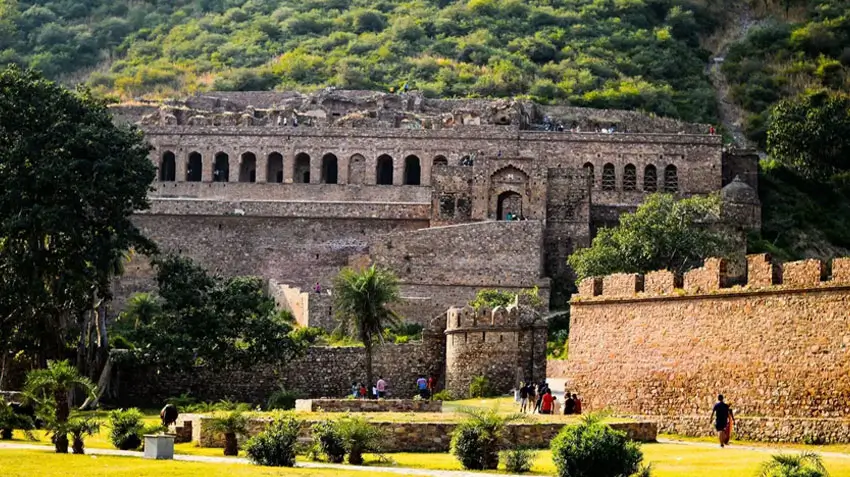
Chat On WhatsApp Contact UsBhangarh Fort is often cited as India’s most infamous haunted site. Located near the edge of a wildlife reserve, the fort stands empty, surrounded by ruins of markets, temples, and homes that once supported a thriving settlement.
Historical records confirm that Bhangarh was abandoned following political decline, economic collapse, and repeated invasions. What history does not explain, folklore fills.
Local legend speaks of curses, forbidden magic, and tragic love stories tied to the fort’s downfall. Regardless of belief, the atmosphere within Bhangarh is undeniably heavy. The absence of modern habitation, combined with architectural decay, creates an unsettling stillness.
Official restrictions prohibit entry after sunset, reinforcing the site’s mystique. Visitors often report heightened unease, not because of sightings, but because the place feels unresolved.
Kuldhara is an abandoned village near Jaisalmer, believed to have been deserted overnight by its inhabitants. Historical analysis suggests economic pressure and political exploitation forced migration, but folklore insists something darker occurred.
According to legend, the villagers cursed the land before leaving, ensuring no settlement could ever prosper there again. To this day, Kuldhara remains uninhabited.
Visitors describe an unnatural quiet, even during daylight hours. Broken homes, empty courtyards, and wind-carved ruins preserve a sense of sudden departure.
Kuldhara’s haunting lies not in apparitions, but in absence. The silence feels intentional, as though the village chose not to be remembered by new life.
Dumas Beach, located along the Arabian Sea, appears ordinary at first glance. Dark sand, strong winds, and quiet stretches define its landscape. Its history, however, connects it to cremation rituals practiced nearby for generations.
Local belief suggests that restless spirits linger along the shore, drawn by unresolved rites or forgotten identities. Visitors report hearing whispers, laughter, or footsteps when walking alone, especially after sunset.
Scientific explanations cite wind acoustics and environmental factors, yet local caution persists. The beach remains accessible, but nighttime visits are discouraged.
Dumas illustrates how natural environments combined with ritual history can evolve into haunted reputations without a single dramatic event.
Nestled within mist-covered hills, Dow Hill Forest is associated with numerous stories of disembodied footsteps, headless apparitions, and eerie sightings near abandoned school buildings.
The forest’s isolation, combined with colonial-era structures and frequent fog, contributes to its unsettling atmosphere. Locals avoid the area after dark, especially during quiet seasons when the forest feels disconnected from time.
Visitors often describe a sensation of being watched rather than seeing anything concrete. Dow Hill’s reputation rests heavily on shared experience rather than singular legend.
Hidden within the modern chaos of Delhi, Agrasen ki Baoli is a centuries-old stepwell descending deep into the earth. Its symmetry and silence contrast sharply with the surrounding city.
Urban legends suggest the water once held supernatural influence, luring individuals toward self-destruction. While there is no historical evidence to support this claim, the structure’s depth, shadow play, and echoing acoustics generate unease.
The baoli’s haunting reputation stems from psychological effect rather than tragedy. It demonstrates how architectural spaces can influence perception and emotion.
Shaniwar Wada was once the seat of Maratha power. Its history includes political intrigue, betrayal, and violent death within palace walls.
Legend speaks of a young prince murdered by close relatives, whose cries are said to echo through the ruins on certain nights. Whether true or not, the palace’s charred remains and abrupt destruction contribute to its dark reputation.
Visitors often report emotional heaviness rather than fear, as though the site remembers violence even after centuries.
Unlike ancient ruins, Ramoji Film City represents a modern haunted narrative. Spread across vast land once used for warfare and burial, the area is associated with unexplained accidents and disturbances during filming.
Actors and crew members have spoken of unusual occurrences, including equipment malfunction and unseen presences. Whether psychological or environmental, the stories persist.
Ramoji highlights how haunted narratives adapt even within contemporary settings.
The Savoy Hotel carries a documented history of unexplained death during the colonial period. A doctor died under mysterious circumstances shortly after arrival, and the case was never resolved.
Guests have reported sensations of presence, unexplained sounds, and emotional discomfort in certain areas of the building.
Unlike folklore-heavy sites, Savoy’s haunting rests on unresolved historical mystery, lending credibility to its reputation.
Jatinga is famous for a strange natural phenomenon where birds reportedly plunge to their deaths under specific conditions. While scientific explanations point to disorientation caused by fog and light, local belief attributes the events to supernatural forces.
The area’s haunting reputation arises from repeated observation rather than myth. Nature itself becomes the source of fear and fascination.
GP Block is associated with modern urban haunting stories involving apparitions, group sightings, and recurring patterns. The lack of historical grounding makes these stories more controversial.
Yet, the consistency of local accounts sustains belief. The site reflects how contemporary urban legends form and spread rapidly.
Curiosity drives haunted tourism, but something deeper is at work. Haunted places offer controlled confrontation with fear, history, and uncertainty.
They allow travelers to engage with questions of mortality, memory, and belief without direct risk. In India, these experiences are often reflective rather than sensational.
Haunted places often hold spiritual or emotional significance for locals. Treating them as amusement undermines cultural context.
Visitors are encouraged to observe respectfully, avoid provocation, and follow local guidelines. Respect ensures that curiosity does not become intrusion.
Most haunted sites are accessible during daytime. Night access may be restricted due to safety, wildlife, or preservation reasons.
Local guides provide historical context that transforms fear into understanding. Travel planning should prioritize safety and legality over thrill-seeking.
Environmental factors such as acoustics, lighting, isolation, and expectation strongly influence experience. Haunted reputations often persist because the mind fills gaps left by silence and darkness.
Recognizing this does not diminish experience. It enriches it.
India’s haunted locations are not just about fear — they are places of history, legends, and unique stories. With comfortable transport and local guidance, you can explore these destinations smoothly, safely, and with complete peace of mind.
Chat On WhatsApp Contact UsThese sites preserve emotional history. Even without ghosts, they carry stories worth hearing.
In India, haunted places remind us that history is not always comfortable, and memory does not always rest peacefully.
Most are not dangerous; perceived fear comes from atmosphere and belief.
Many sites restrict nighttime entry for safety and preservation.
Belief varies, but stories are deeply embedded in local culture.
Yes, during daytime with respectful behavior.
Many experiences can be explained psychologically or environmentally.
Usually yes, unless restricted by authorities.
Visiting with others is generally more comfortable and advisable.
Yes, historical context adds depth beyond fear.
No, modern locations also develop haunted reputations.
They combine history, mystery, and cultural insight.